Most cat gear is designed as if nobody in the house has to look at it. The default cat tree is a five-foot column of beige carpet. The default litter setup is an open plastic pan that announces itself from across the room. The default feeding station is two stainless bowls on a rubber mat by the fridge. Your cat is thrilled. Your living room is not.
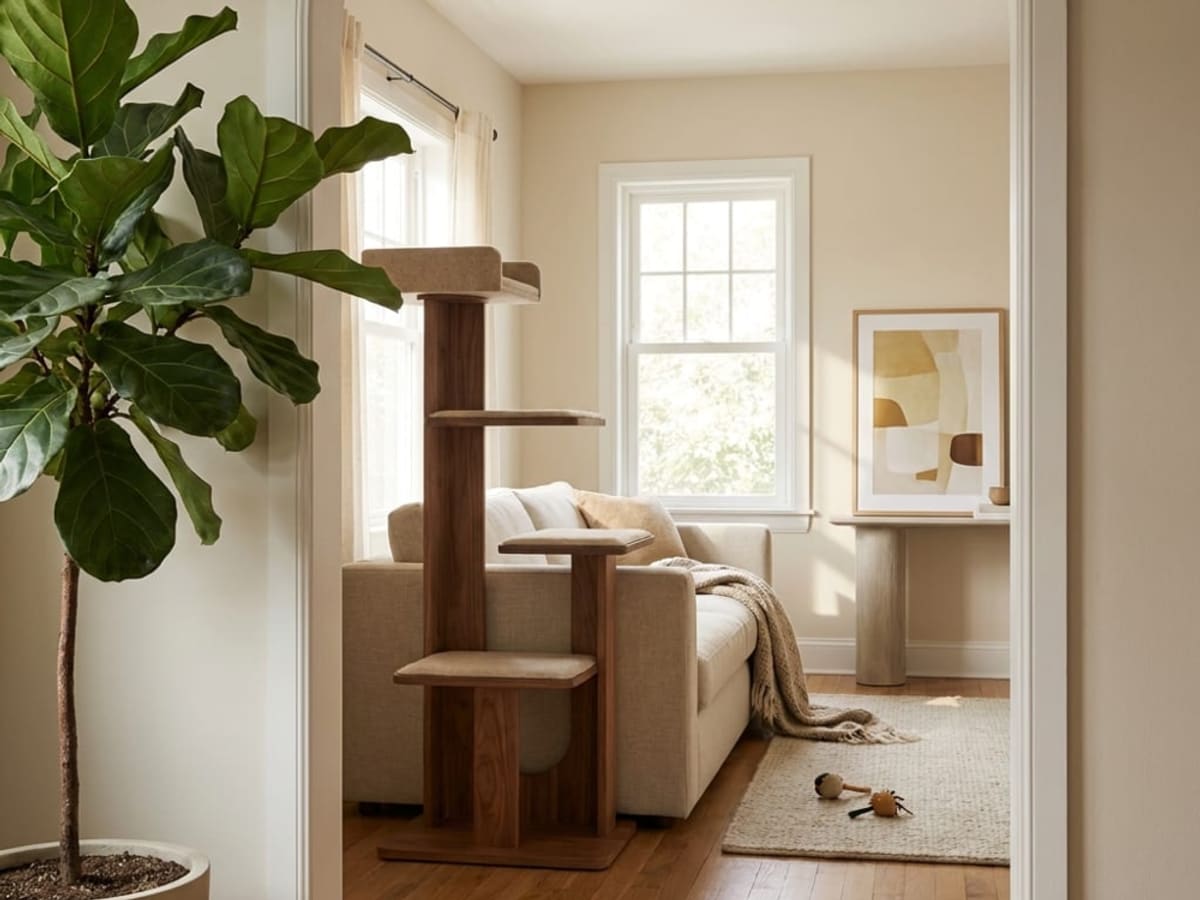
That gap is the whole reason this guide exists. Over the last few years a genuinely different category has taken shape: cat furniture built from wood and veneer and neutral fabric, with mid-century lines and proportions that let it sit in a real room without shouting “pet product.” Litter boxes that look like sideboards. Cat trees that look like plant stands. Feeders that look like a small ceramic still life. The pieces exist; they’re just outnumbered on the shelf by the carpet-and-plastic stuff, so you have to know what you’re looking for.
This is the hub page that maps the whole territory. It covers every category of cat furniture that can read as real home decor, explains what separates the pieces that blend in from the pieces that don’t, and points you to a dedicated deep-dive roundup for each category. It’s written for the design-conscious cat owner, especially the one in a small apartment, where every object is on display and there’s no spare room to hide the ugly stuff. If you’ve ever stood in your living room thinking the cat’s furniture is undoing the rest of the room, you’re exactly who this is for.
What makes cat furniture actually look like furniture
The line between “pet product” and “furniture” comes down to a handful of concrete things, and once you can see them you can’t unsee them.
Materials. The single biggest tell is what a piece is made of. Real wood, wood veneer over engineered panels, rattan, powder-coated metal, ceramic, and neutral woven upholstery all read as furniture because they’re the same materials your actual furniture is made of. Wall-to-wall carpet, molded plastic, and gray faux fur read as pet product because nothing else in your home is built that way. You don’t need everything to be solid hardwood — good engineered wood and veneer look great and cost far less — but the surface you see matters enormously.
Lines and silhouette. Mid-century modern is the aesthetic that dominates this whole category, and for a good reason: its vocabulary of tapered legs, warm woods, clean horizontal lines, and unfussy geometry happens to disguise cat furniture beautifully. A litter enclosure with tapered legs looks like a credenza. A cat bed shaped like a low upholstered tub looks like a small lounge chair. The more a piece borrows the silhouette of ordinary furniture, the more it disappears into the room.
Palette. The furniture-forward pieces live in a narrow, calm range: walnut, oak, and natural wood tones; white, black, cream, greige, and soft sage; the occasional muted mustard or terracotta as an accent. The stuff that clashes tends to be high-saturation — bright blue plastic, that specific pet-store gray — or a wood tone that fights everything else in the room. Matching the palette you already own is what turns a functional object into one that looks intentional.
Scale. In a small apartment, scale is doing quiet work the whole time. A piece that’s correctly proportioned for the room feels like it belongs; an oversized tower in a studio feels like it’s crowding you out. This is why so much good small-space cat furniture goes vertical — wall shelves, tall narrow perches, slim feeders — putting the cat’s territory up in the air where it doesn’t eat your floor. Look for a footprint that suits your actual square footage, not the catalog photo’s loft.
Keep those four filters in mind and the rest of this guide gets easy. Here’s every category, one at a time.
Litter-box enclosures
The litter box is the hardest thing in the home to make look good, which is exactly why solving it has the biggest payoff. A modern litter enclosure hides the pan inside a wood cabinet that reads as a sideboard, bench, or end table, with a discreet cat entrance on the side or back and a top or door that opens for scooping. The good ones give you real furniture on the outside and a wipeable, litter-tolerant surface on the inside.
The decor angle here is straightforward: a well-chosen enclosure doesn’t just hide the box, it adds a piece of storage furniture you’d have wanted anyway. Look for enough interior clearance for your specific box, ventilation, an entry your cat can actually use, and access that makes daily scooping easy rather than a chore you’ll come to resent. For the full breakdown of styles, sizes, and what to check before buying, see my complete guide to the best litter-box furniture and enclosures.
Modern cat trees
The cat tree is the category most responsible for the “everything cat is ugly” reputation, and also the one that’s improved the most. The furniture-forward version swaps carpet and faux fur for wood veneer or solid rubberwood frames, sisal or jute scratching posts, and perches sized like real seating rather than saucers. Some lean fully into mid-century form with tapered legs; others read almost like modernist plant stands with a cat on top.
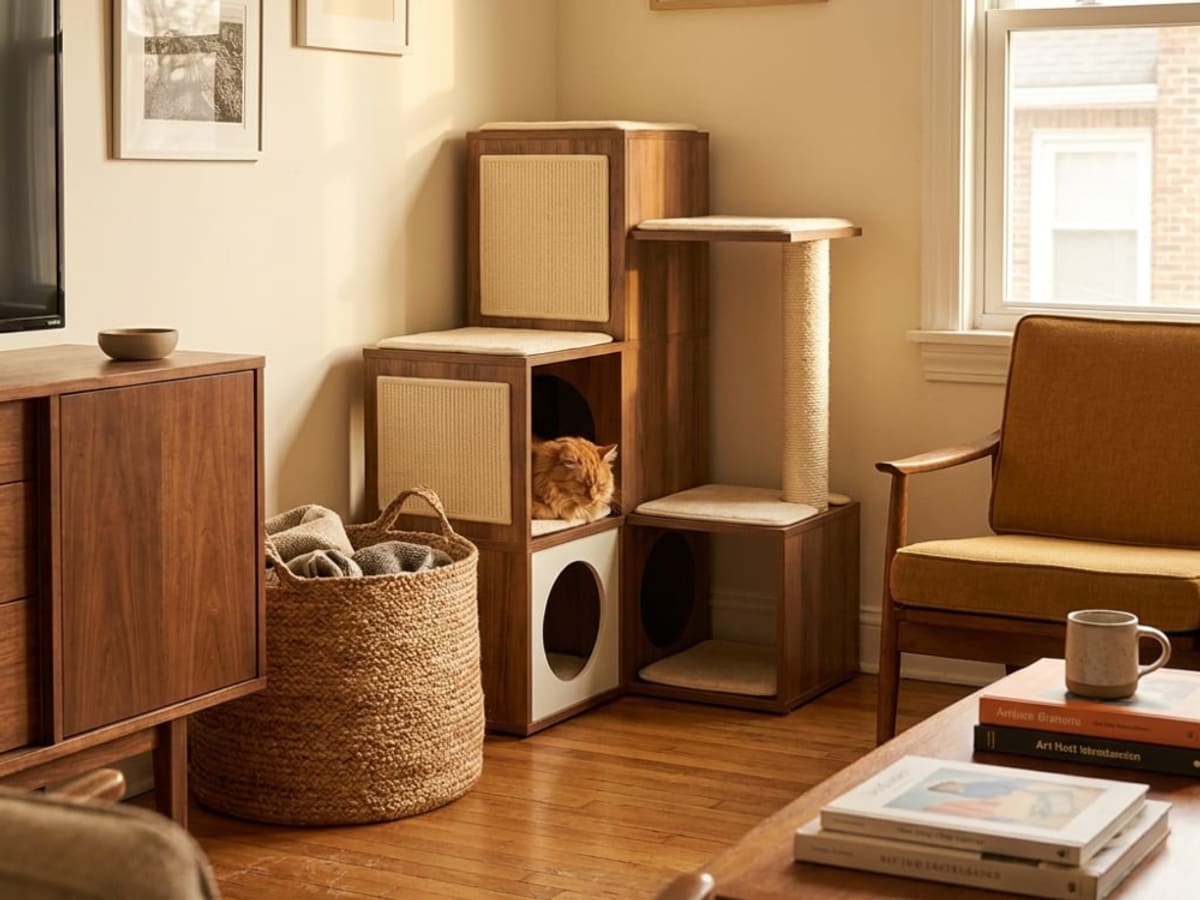
The trick is that a cat tree still has to do a cat tree’s job. A gorgeous tower your cat ignores, or one that wobbles when she lands the top perch, is expensive sculpture. So the decor win only counts if the piece is also stable, tall enough to matter, and built with perches big enough for the cat you actually have. For a full rundown of towers that hold up in a mid-century room, read my guide to modern cat trees that match a mid-century living room. If you are still choosing between a tower and an enclosed condo, cat tree vs cat condo settles that first.
Wall-mounted cat shelves
If you’re short on floor space, the walls are where the best design opportunities live. Wall-mounted cat shelves give your cat the vertical territory they crave — climbing, perching, surveying — while taking up zero square footage on the ground. Done well, a set of staggered wood shelves reads as a deliberate design feature, closer to a floating bookshelf arrangement than a pet accessory.
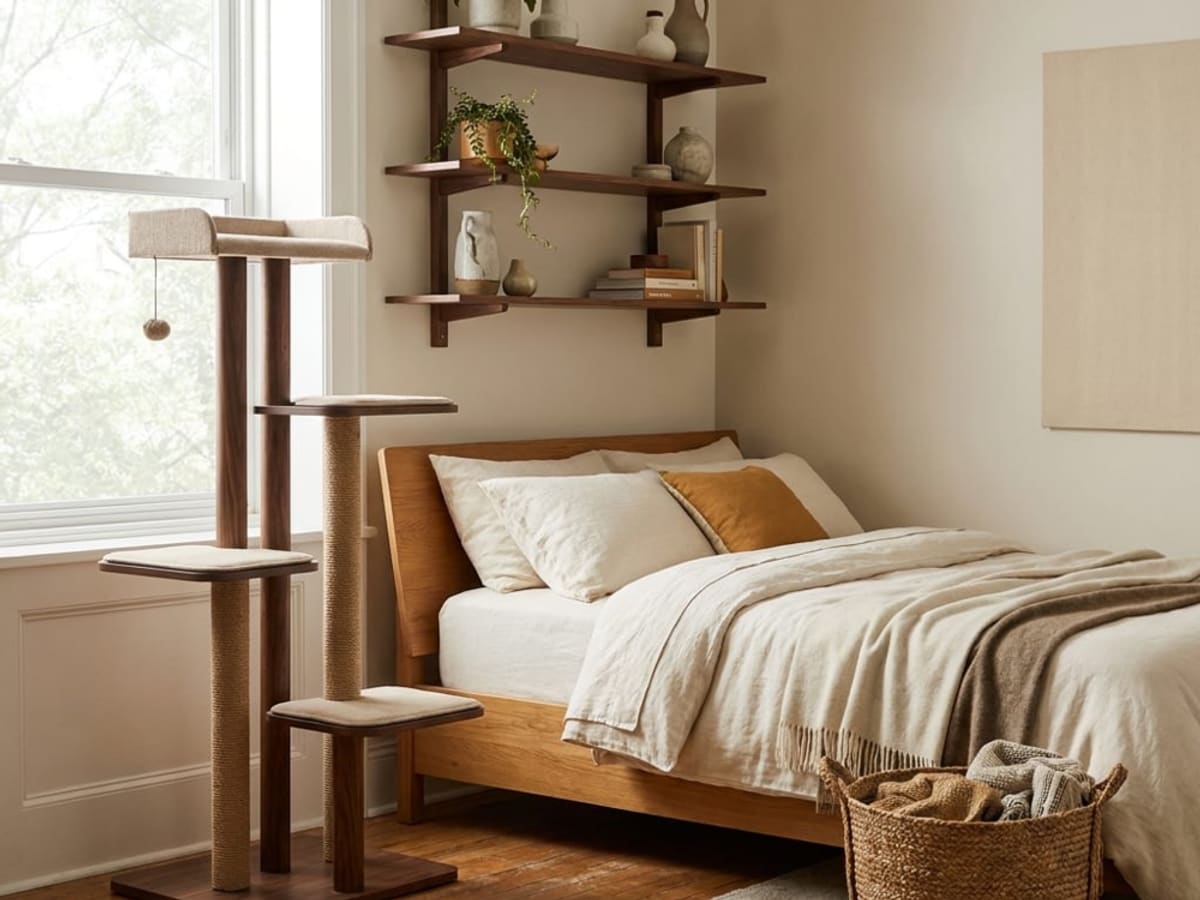
The decor angle is real here: natural wood or matte-finished shelves in a considered layout look intentional and architectural. The things that matter most are secure mounting into studs, weight rating for your cat, and a spacing plan that gives the cat a climbable route rather than a random scatter of planks. This is the single most powerful category for small apartments, so it’s worth getting right. See my full guide to cat wall shelves for small apartments.
Cat beds
A cat bed is the easiest category to get an instant decor win, because a good one just looks like a small piece of furniture. The furniture-forward options include low upholstered tubs in neutral bouclé, woven rattan baskets, felted-wool caves, and wood-framed loungers that echo a mid-century armchair. In a corner or beside the sofa, the right one reads as an intentional accent rather than a pet bed.
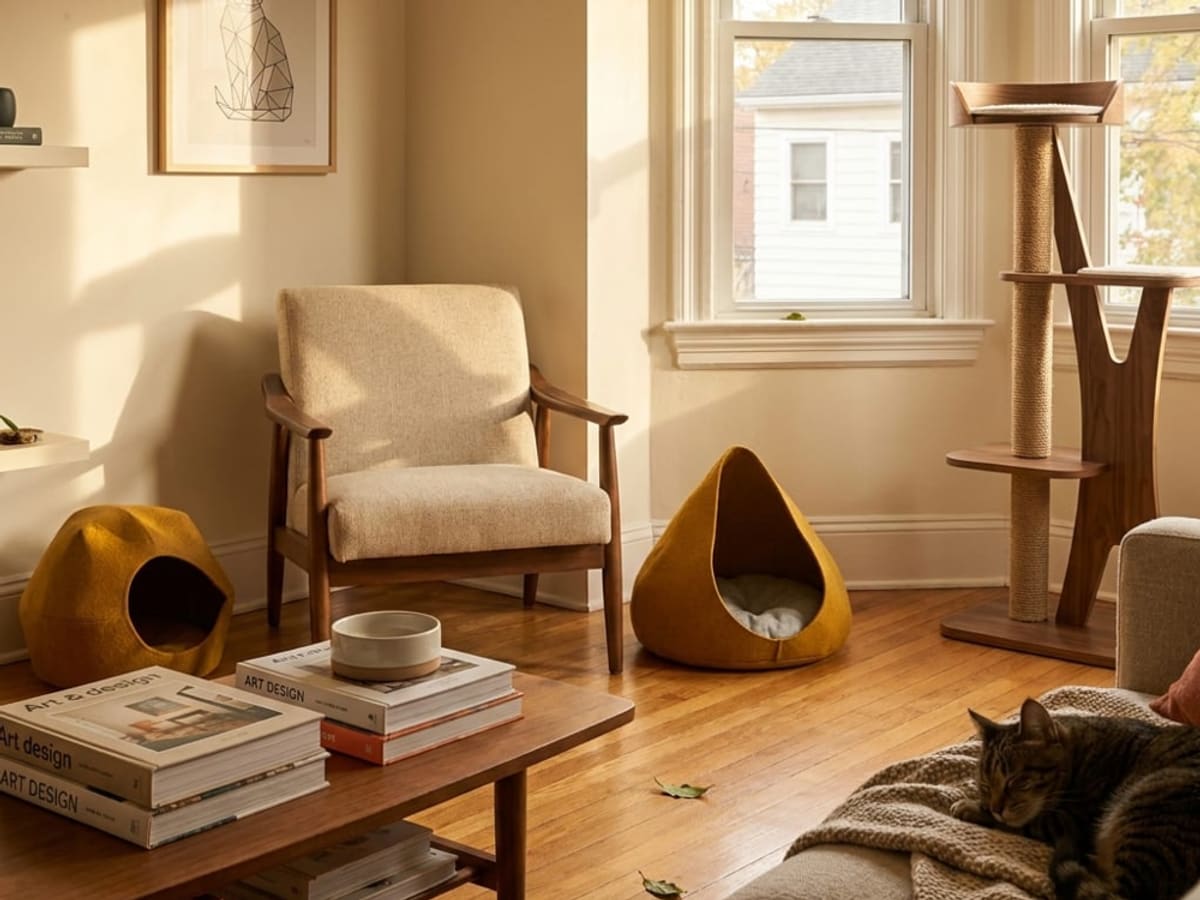
What to look for: a shape and depth your cat actually likes (some want an enclosed cave, others a shallow open bowl), a removable, washable cover so it stays looking clean, and a fabric that coordinates with your existing upholstery. Because it’s soft and low-commitment, a cat bed is often the best first purchase for testing whether your cat will use a designated spot at all. For shapes, materials, and styles that blend in, browse my roundup of modern cat beds.
Cat scratchers
Cats will scratch something, so the only real question is whether the thing they scratch looks like garbage or looks like an object. The default cardboard scratcher is functional and cheap but rarely attractive. The furniture-forward alternatives include sculptural curved-cardboard loungers, wood-and-sisal posts with a mid-century base, and wall-mounted scratching panels that pass as wall decor.
The decor angle is about integrating the scratcher into the room rather than apologizing for it. The catch is that looks alone won’t save your sofa; the scratcher has to be the kind your cat prefers (vertical vs. horizontal, sisal vs. cardboard vs. wood), placed where your cat wants to scratch, and sturdy enough not to tip mid-scratch. Get the function right and the good looks are a bonus. See my guide to stylish cat scratchers that don’t wreck your decor.
Cat bowls and raised feeders
The feeding station is a small footprint with an outsized visual impact, because it usually lives in the kitchen or dining area where the rest of your decor is already dialed in. The modern version trades plastic bowls and a rubber mat for ceramic or stainless bowls set into a wood or metal stand, often raised to a height that’s easier on a cat’s neck and back.
The decor angle: a raised feeder in wood and ceramic looks like a small, deliberate object rather than clutter on the floor. Beyond looks, raised feeding has genuine ergonomic benefits for many cats, and a spill-catching design keeps the surrounding floor cleaner. Look for bowls that lift out for washing, a stable base that won’t slide, and a material and tone that match your kitchen. For stands and bowls that earn their spot, see my guide to modern cat bowls and raised feeders.
Cat water fountains
Many cats drink more when the water moves, which makes a fountain one of the few pieces of cat gear with a real health argument behind it, but most fountains look like a lump of translucent plastic humming in the corner. The furniture-forward version uses ceramic or stainless steel, a quiet pump, and a calm, sculptural shape that reads as a small tabletop object.
The decor angle is getting the hydration benefit without the plastic-blob penalty. Practically, look for a material that’s easy to clean and resists slime, a pump quiet enough that you forget it’s running, and a capacity that suits how often you want to refill. Ceramic tends to win on both looks and cleaning. For the models that combine quiet operation with a form you’d leave out on display, read my guide to modern cat water fountains.
Cat window perches
A window perch is where design and cat happiness overlap almost perfectly: cats adore a sunny window with a view, and a well-made perch or hammock delivers that without a bulky floor structure. The furniture-forward options include wood-framed shelf perches, minimalist hammocks in neutral fabric, and cradle-style loungers that mount cleanly to the sill or glass.
The decor angle is a piece that all but disappears against the window while giving your cat prime real estate. What matters is a secure, appropriate mount for your window type, a weight rating that suits your cat, and a fabric or frame that doesn’t fight the room. Like wall shelves, this is a small-apartment favorite because it adds territory without taking floor. See my guide to cat window perches and hammocks.
How to make it all blend with your decor
Buying good-looking pieces is half the job; making them feel like one coherent room is the other half. A few principles pull it all together.
Lean mid-century, and lean consistent. Pick a lane and stay in it. If your home is warm walnut and tapered legs, choose cat pieces in the same wood tone and silhouette rather than mixing a walnut enclosure with a black-metal feeder and a light-oak tree. Repetition of one or two wood tones across the cat furniture is what makes it look designed instead of accumulated.
Match the palette you already own. Before you buy, name the three or four colors that actually run through your space: say, walnut, cream, black, and a muted sage. Hold every cat purchase against that list. A piece that hits two of those tones will settle in instantly; a piece in a color that appears nowhere else will always look like a visitor.
Think vertically in small spaces. In an apartment, floor space is your scarcest resource, so push the cat’s world upward. Wall shelves and window perches give your cat territory without costing you square footage, and they read as architecture rather than clutter. Reserve the floor for one or two well-chosen pieces — a bed, maybe a single tree — instead of scattering gear across the room.
Let pieces double as furniture you’d want anyway. The strongest choices earn their footprint twice. A litter enclosure that’s also a console with storage, a cat bed that also works as a side stool, a feeder stand that also holds supplies: each one justifies its place in a small room by doing a human job as well as a cat job.
Edit ruthlessly. More cat furniture is not more cat happiness past a point, and clutter is the fastest way to make even beautiful pieces look bad. A few well-placed, well-matched items beat a room full of stuff.
FAQ
What is modern cat furniture?
Modern cat furniture is cat gear — litter enclosures, trees, shelves, beds, scratchers, feeders, fountains, and perches — designed to look like real home furniture rather than obvious pet products. It’s typically built from wood, veneer, ceramic, metal, and neutral upholstery in mid-century-leaning shapes and calm palettes, so it can sit in a normal living room without clashing. The goal is furniture that serves the cat while reading as decor to human eyes.
Is wooden cat furniture sturdy enough for big cats?
Generally yes, and often it’s sturdier than the carpet-and-particleboard alternative. Solid rubberwood, oak, and quality engineered wood with proper joinery can easily handle a large cat climbing and landing. The thing to check isn’t the material so much as the build: look for a wide, stable base on trees, secure stud mounting for wall shelves and perches, and a stated weight rating. A well-made wood piece will usually outlast a flimsy plastic one.
How do I stop cat furniture from clashing with my decor?
Start by naming the three or four colors and the one wood tone that already run through your room, then buy cat pieces that stay inside that palette. Keep the silhouette consistent — commit to mid-century lines rather than mixing styles — and favor natural materials over plastic and carpet. Matching wood tones across your cat furniture and choosing neutral fabrics does most of the work of making it all look intentional.
Is designer cat furniture worth the extra money?
It depends on what you’re paying for. Paying more for genuinely better materials, real stability, and a design you’ll happily look at every day is usually worth it, especially in a small space where the piece is always on display. Paying a premium purely for a brand name, without better build quality, is not. Focus on materials, construction, and whether the piece also does a useful job, rather than the label.
What’s the best cat furniture for a small apartment?
Go vertical. Wall-mounted shelves and window perches give your cat climbing and lounging territory without using any floor space, which is the scarcest resource in a small home. Pair those with one or two multi-purpose floor pieces — a litter enclosure that doubles as storage, or a bed that also works as a side stool — and edit down to a few well-matched items rather than scattering gear everywhere.
Do cats actually use furniture-style pieces, or just the ugly ones?
Cats respond to function, not aesthetics, so a good-looking piece works fine as long as it does the cat’s job well. A stylish scratcher only helps if it’s the type and orientation your cat prefers; a beautiful tree only helps if it’s stable and tall enough; a chic fountain only helps if it runs quietly. Choose pieces that satisfy the cat’s actual needs first, and the fact that they also look good is pure upside.
Where to start
If you’re just beginning, start where the payoff is biggest. The litter-box enclosures solve the ugliest problem in the home, and for small apartments the cat wall shelves add the most territory for the least floor space. From there, the modern cat trees roundup is the one most readers dig into next. Pick the category that’s bugging you most, and let each dedicated guide take it from there.