You put real thought into your kitchen — the countertops, the hardware, the little ceramic things on the open shelf. And then there they are on the floor: two scratched plastic bowls in a color no one chose on purpose, one of them slowly walked halfway across the room by a determined cat. It is a small eyesore, but it is right there underfoot every single day.
There is a comfort angle too, and it is easy to miss. Cats have sensitive whiskers, and a deep, narrow bowl forces those whiskers to press against the sides at every bite. A lot of cats find that genuinely unpleasant — you may have seen it as a cat who paws food onto the floor, eats from the very center, or walks away from a full dish. The fix is a shallow, wide bowl that leaves the whiskers alone. Raising the bowl a few inches off the floor helps too: it puts the head and neck in a more natural line, which many owners find eases mealtime for older or arthritic cats and can help cats who tend to bring food back up after eating.
So this is a guide about getting both things at once — a bowl or a small raised feeder that is kinder to your cat and looks like it belongs in a nice room. To build the bowls, water, and mat into one tidy setup, see my cat feeding station guide. I leaned toward ceramic and stainless steel and away from plastic, which scratches, harbors bacteria in those scratches, and is often blamed for feline chin acne. Here is how I judged every pick:
- Whisker-friendly shape: shallow and wide enough that whiskers are not pressed against the sides.
- Raised height and posture: a sensible elevation for easier eating, especially for seniors.
- Material: ceramic or stainless steel, easy to clean, no scratchy plastic against the chin.
- Spill and mess control: tip resistance, non-slip bases, or a tray to catch what gets flicked out.
- Looks in a real kitchen: something you would not mind a guest seeing on the floor.
No prices here: those change constantly, so check the current price and the latest reviews on Amazon before you buy. Where I could not fully confirm a detail, I have said so.
Getting the bowl right
The right bowl comes down to your cat’s shape, age, and habits more than looks — though you can absolutely have both.
Whisker-friendly width. This is the big one. Aim for a bowl noticeably wider than your cat’s whisker span and shallow enough that the whiskers never brush the sides. Shallow and wide beats deep and narrow almost every time. If your cat scoops food onto the floor or eats from the very middle, a wider dish often fixes it overnight.
Single vs. double. A double feeder keeps food and water in one tidy piece, which is neat and space-saving. But some behaviorists suggest cats prefer their water a little away from their food, since still water next to food can feel less appealing. If your cat drinks poorly, try separating the water bowl and see if it helps.
Raised height for age and posture. A few inches of elevation puts the head and neck in a straighter line, which many owners find easier for senior or arthritic cats and for cats that tend to regurgitate after eating. Match the height roughly to your cat: the bowl rim around low-chest height is a reasonable target. Kittens do fine with low or floor-level bowls; very tall feeders suit bigger or older cats.
Ceramic vs. stainless vs. why not plastic. Stainless steel is the easiest to sanitize, effectively indestructible, and never holds odors — the safe default. Ceramic looks the best and is easy to clean, just choose a lead-and-cadmium-free glaze and accept that it can chip. Plastic is the one to avoid: it scratches, those scratches trap bacteria, and it is commonly linked to feline chin acne. If your cat has stubborn chin breakouts, switching away from plastic is a common first step. I go deeper in my ceramic vs. stainless bowl comparison, and the same logic guides my cat water fountain picks.
Dishwasher-safe and tip resistance. You will clean these constantly, so dishwasher-safe is close to essential. For tip and slide resistance, look for a non-slip silicone ring or base, a heavy ceramic body, or a wide stable stand — especially if you have a pushy eater who shoves the bowl around.
Comparison at a glance
| Product | Reads as | Made of | Bowls |
|---|---|---|---|
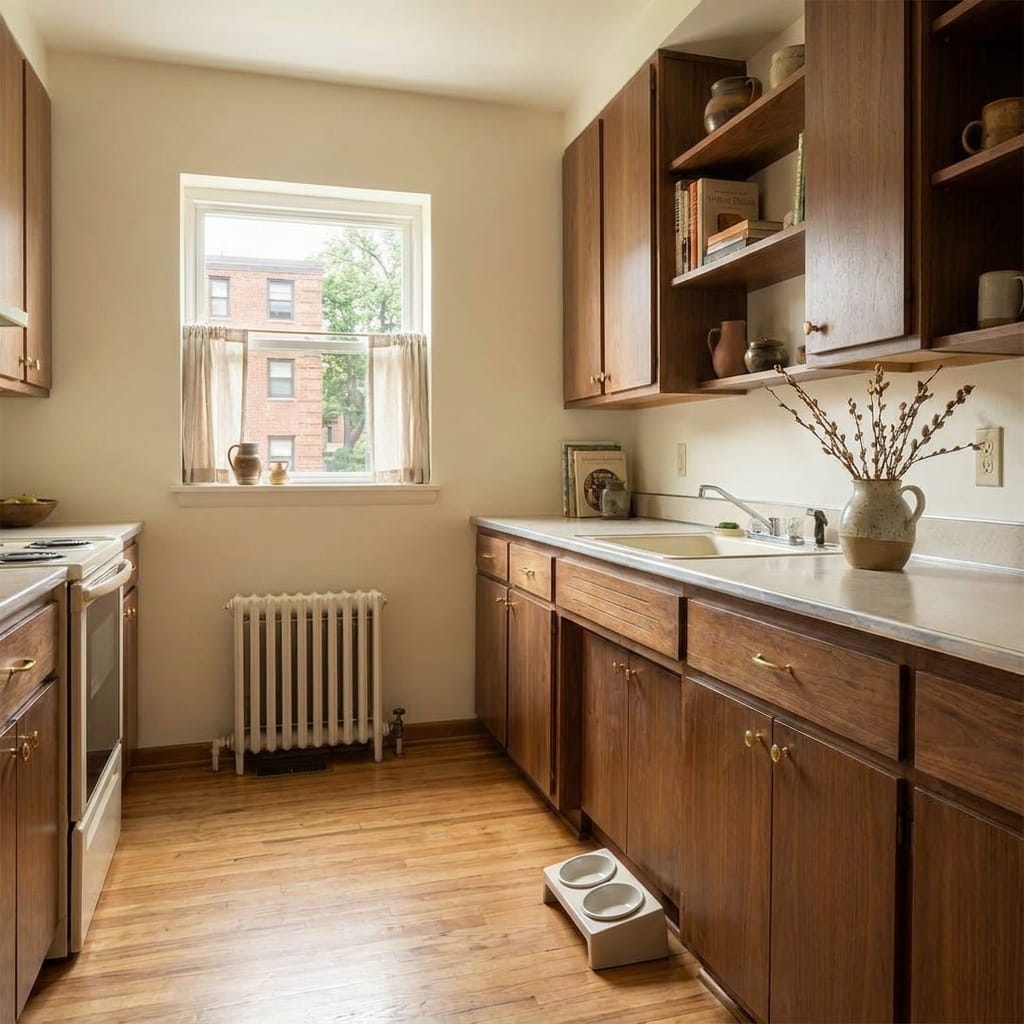 Top pickNecoichi Elevated Ceramic Bowl (15-degree Tilted, Extra Wide) Top pickNecoichi Elevated Ceramic Bowl (15-degree Tilted, Extra Wide) | Reads as: Elevated dish | Made of: Porcelain ceramic | Bowls: 1 of 4. One; buy a second for water. A built-in tilt and raise with a non-slip silicone ring |
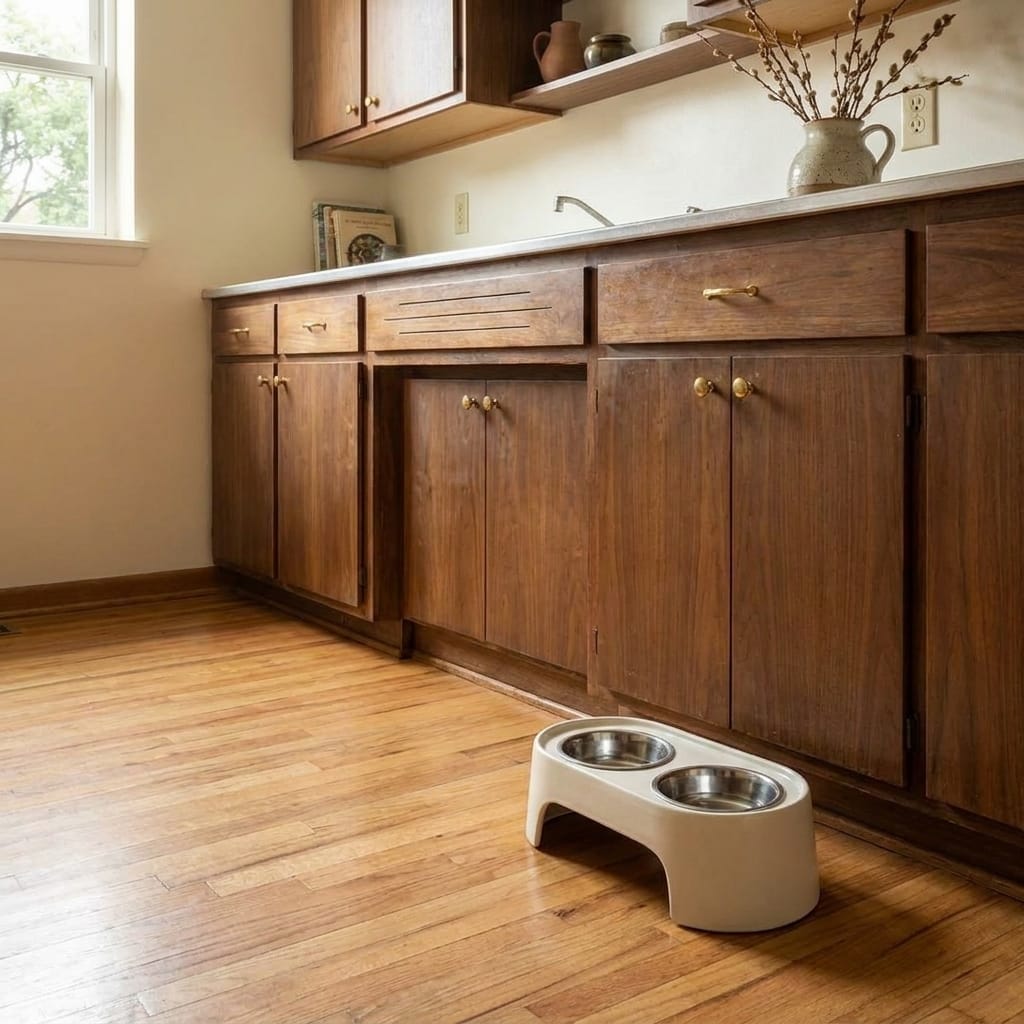 Runner-upHepper NomNom Stainless Bowl Station Runner-upHepper NomNom Stainless Bowl Station | Reads as: Bowl station | Made of: Stainless dishes in a tray | Bowls: 2 of 4. Two, in a catch tray. Maker’s size: 16″W x 9″D x 2″H (opens in a new tab)Inside: Each dish 4″ x 5″, 1″ deep. Wrap-around tray that catches flung kibble and water |
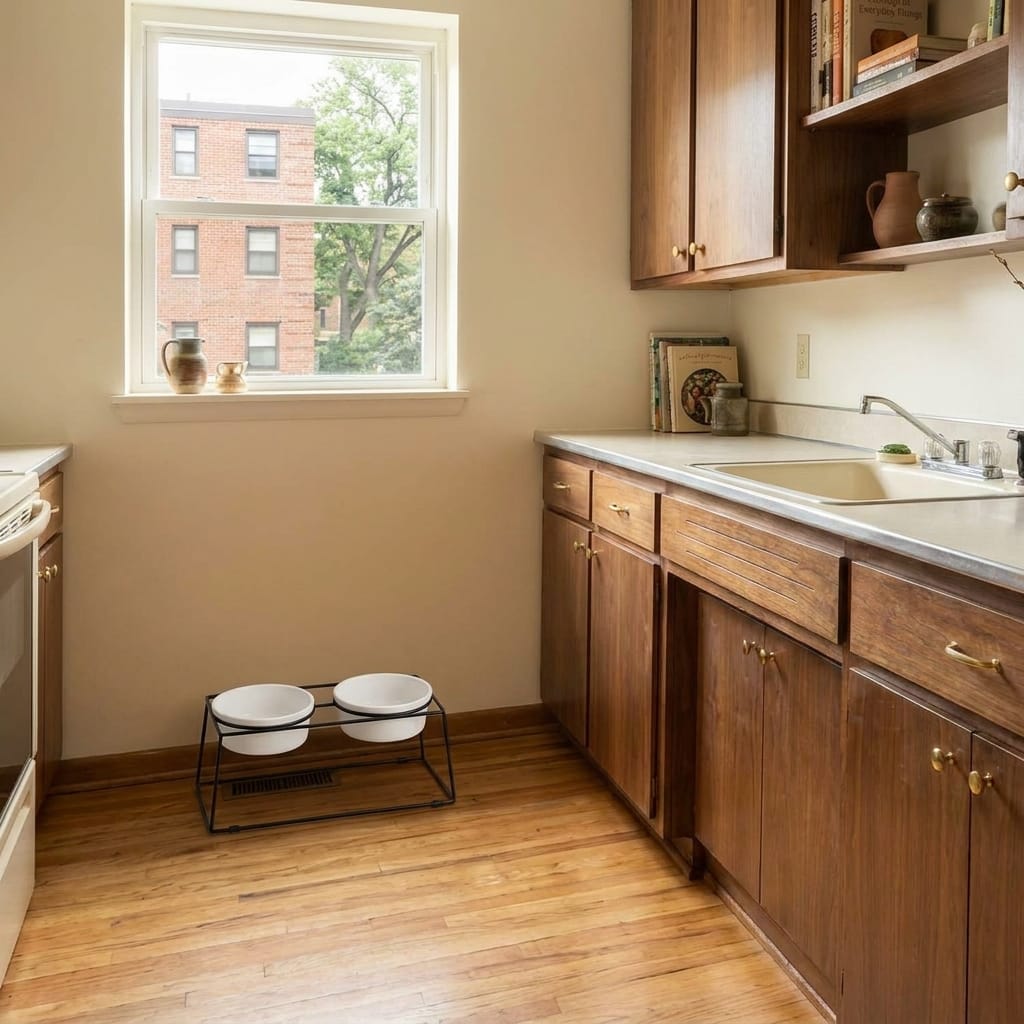 Y YHY Ceramic Raised Bowls (Metal Stand) Y YHY Ceramic Raised Bowls (Metal Stand) | Reads as: Raised bowl | Made of: Ceramic on a metal stand | Bowls: 1 of 4. One; water needs its own setup. Shallow-wide dish lifted on a modern powder-coated stand |
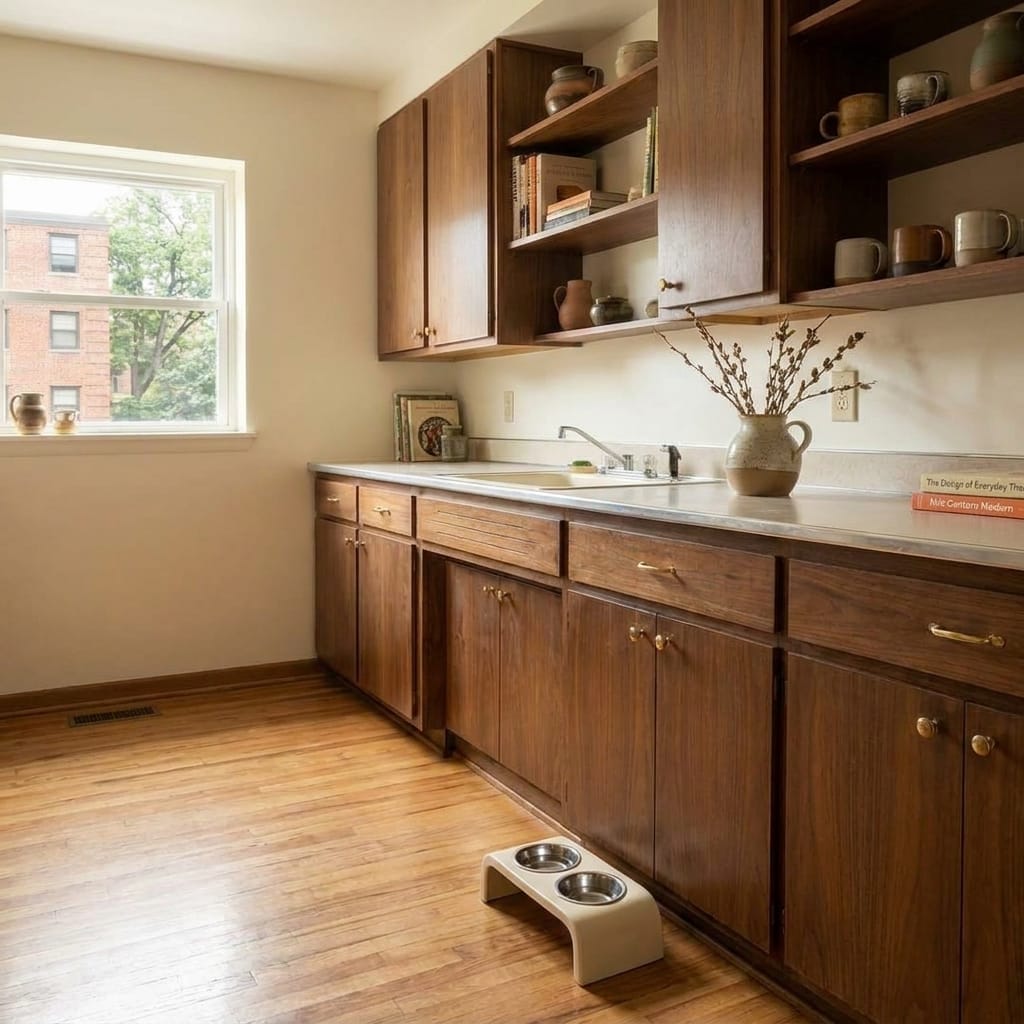 UPSKY Double Stainless Raised Bowls UPSKY Double Stainless Raised Bowls | Reads as: Double feeder | Made of: Stainless on a stand | Bowls: 2 of 4. Two, on one raised base. Two tilted, detachable stainless bowls on one raised base |
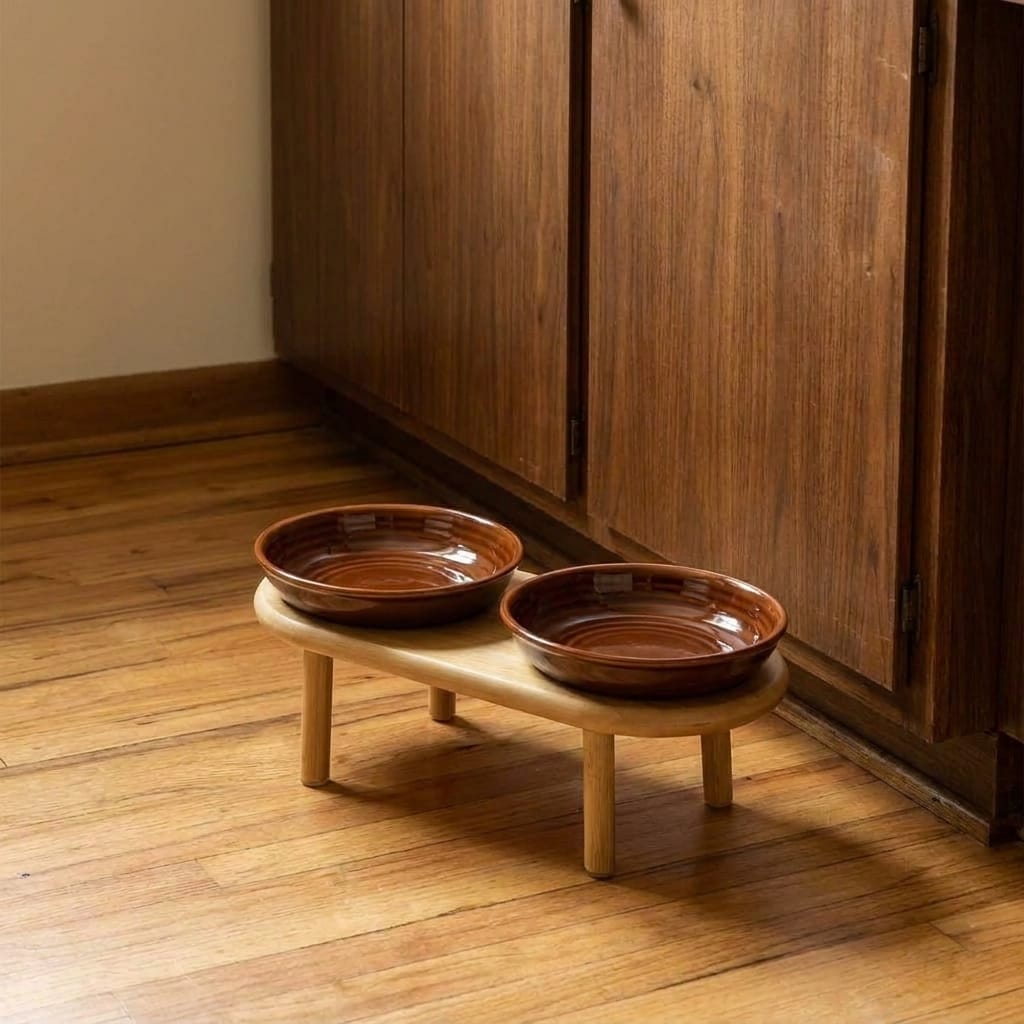 Havniva Elevated Ceramic Bowl (Bamboo Stand) Havniva Elevated Ceramic Bowl (Bamboo Stand) | Reads as: Raised bowl | Made of: Ceramic on a bamboo or acacia-wood stand | Bowls: 1 of 4. One, on an adjustable stand. Shallow, whisker-friendly ceramic on an angle-adjustable wood stand |
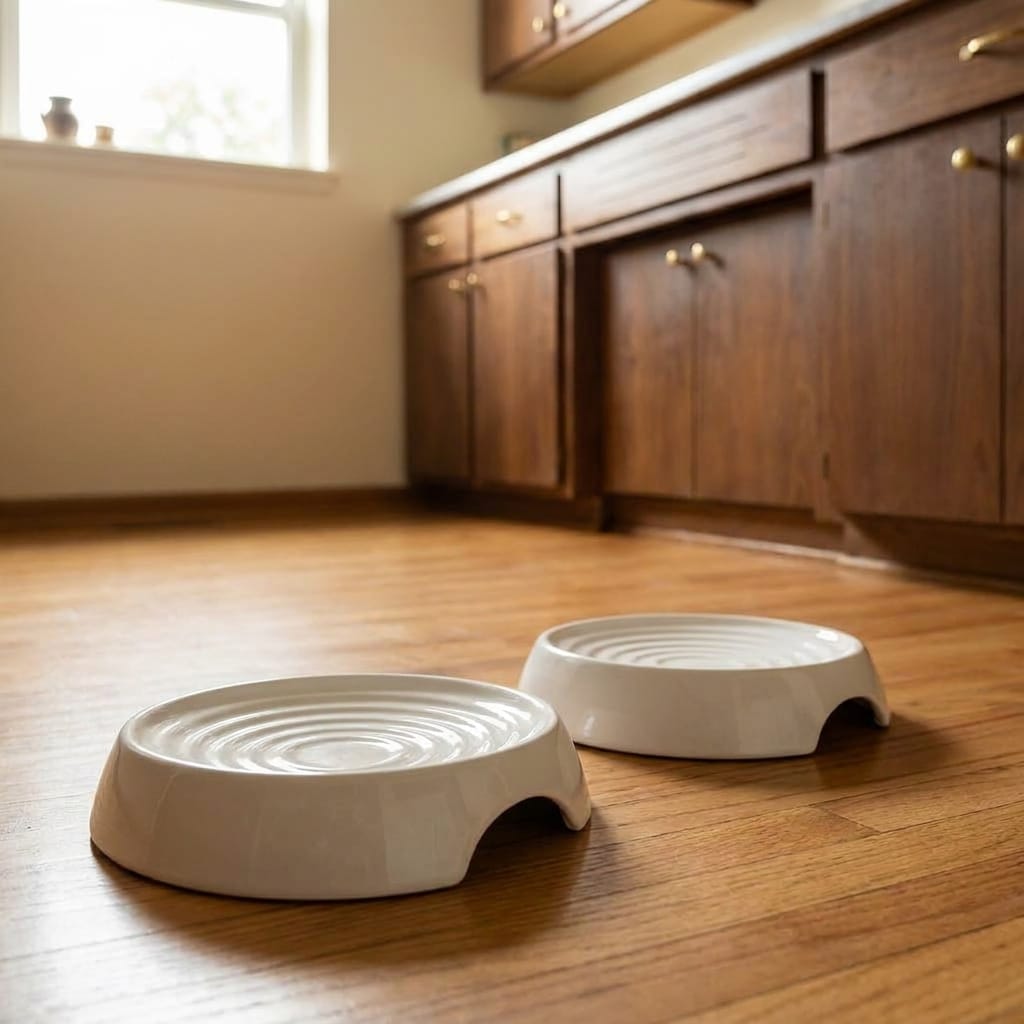 CatGuru Whisker-Friendly Shallow Bowls CatGuru Whisker-Friendly Shallow Bowls | Reads as: Floor dish | Made of: Ceramic (pack of 2) | Bowls: 2 of 4. Two shallow dishes. Maker’s size: 6.6″ x 6.6″ x 1.2″ (opens in a new tab). Extra-wide, shallow whisker-friendly dishes with a non-slip base |
Necoichi Elevated Ceramic Bowl (15-degree Tilted, Extra Wide)
Necoichi is the name that comes up most often when people talk about whisker fatigue, and this is the version that does the most in one piece: an extra-wide porcelain dish that is both raised and tilted about 15 degrees toward the cat. The tilt keeps food pooled at the low front edge so your cat is not chasing kibble around, and the wide shallow shape keeps whiskers clear of the sides. It is porcelain, so it wipes clean, goes in the dishwasher, and reads as a small ceramic dish rather than a pet gadget.
- Right for
- Cats who bring food back up, and clean minimalist kitchens
Before you buy
One bowl only, so you will want a second for water. Ceramic can chip or crack if knocked off a counter; treat it like your other ceramics. Confirm the current dimensions on the latest Amazon listing.
The others, and why they are not the pick
Every one of these is a real product I would point someone to. None of them is the one I would put in this room, and the specific reason is under each.
Measure first, for any of these: your cat’s whisker span and low-chest height, against the bowl’s width and rim height.
AI illustration
Y YHY Ceramic Raised Bowls (Metal Stand)
Right for: A single ceramic bowl on a slim, decor-friendly stand
- Reads as Raised bowl
- Made of Ceramic on a metal stand
Why it is not the pick: A single bowl and stand, so water needs its own setup.
Check price: Y YHY Ceramic Raised Bowls (Metal Stand) — opens Amazon in a new tab
AI illustration
UPSKY Double Stainless Raised Bowls
Right for: Feeding food and water together, raised
- Reads as Double feeder
- Made of Stainless on a stand
Why it is not the pick: The stand itself is typically a molded material, not metal or ceramic: the bowls are the stainless part.
Check price: UPSKY Double Stainless Raised Bowls — opens Amazon in a new tab
AI illustration
Havniva Elevated Ceramic Bowl (Bamboo Stand)
Right for: A natural-material design piece for a modern kitchen
- Reads as Raised bowl
- Made of Ceramic on a bamboo or acacia-wood stand
Why it is not the pick: The ceramic bowl lifts out to clean, but confirm whether the wood stand is wipe-only on the current listing.
Check price: Havniva Elevated Ceramic Bowl (Bamboo Stand) — opens Amazon in a new tab
AI illustration
CatGuru Whisker-Friendly Shallow Bowls
Right for: Whisker relief without raising the bowl at all
- Reads as Floor dish
- Made of Ceramic (pack of 2)
- Maker’s size 6.6″ x 6.6″ x 1.2″ (opens in a new tab)
Why it is not the pick: Not raised, so it does not help with neck or posture the way an elevated bowl does.
Check price: CatGuru Whisker-Friendly Shallow Bowls — opens Amazon in a new tab
FAQ
What is whisker fatigue, and are raised bowls the fix?
Whisker fatigue is the discomfort a cat feels when its sensitive whiskers repeatedly press against the sides of a deep, narrow bowl. The real fix is a shallow, wide bowl that keeps whiskers clear; raising the bowl is a separate benefit for posture and digestion. A wide, shallow, slightly raised bowl gives you both.
Do raised bowls actually help with digestion and vomiting?
Many owners report fewer post-meal vomiting episodes after switching to a raised or tilted bowl, and the more natural head-up angle makes sense for easier swallowing. It is not a guaranteed cure, and frequent vomiting is worth a vet visit — but a raised, tilted bowl is a low-risk thing to try. Check the latest reviews on Amazon to see how it worked for other cats.
Ceramic or stainless steel: which is better?
Stainless is the most hygienic and durable and never holds smells, so it is the safest choice for a cat with sensitive skin. Ceramic usually looks better in a kitchen and cleans up just as well, as long as the glaze is lead-and-cadmium-free and you accept it can chip. Both are far better than plastic.
What height is right for kittens versus senior cats?
Kittens and small cats do fine with low or floor-level bowls and can find tall feeders awkward. Older, larger, or arthritic cats tend to benefit most from a few inches of elevation, which reduces how far they crane their neck down. A good rule of thumb is the bowl rim around the cat’s low-chest height.
Is plastic really that bad?
It is the weakest choice. Plastic scratches easily, and those micro-scratches trap bacteria that are hard to fully wash out, which is why plastic bowls are frequently linked to feline chin acne. Stainless or ceramic sidesteps all of that, cleans more completely, and looks better on your floor.
How do I stop the bowl from sliding around the kitchen?
Look for a non-slip silicone ring or rubberized base, choose a heavier ceramic or a wide-footed stand, or set the bowl on a small mat. A contained station like the NomNom also helps by keeping everything in one tray. Heavier and wider generally means harder for your cat to shove.