Skip to my pick: Necoichi Elevated Ceramic Bowl (15-degree Tilted, Extra Wide)
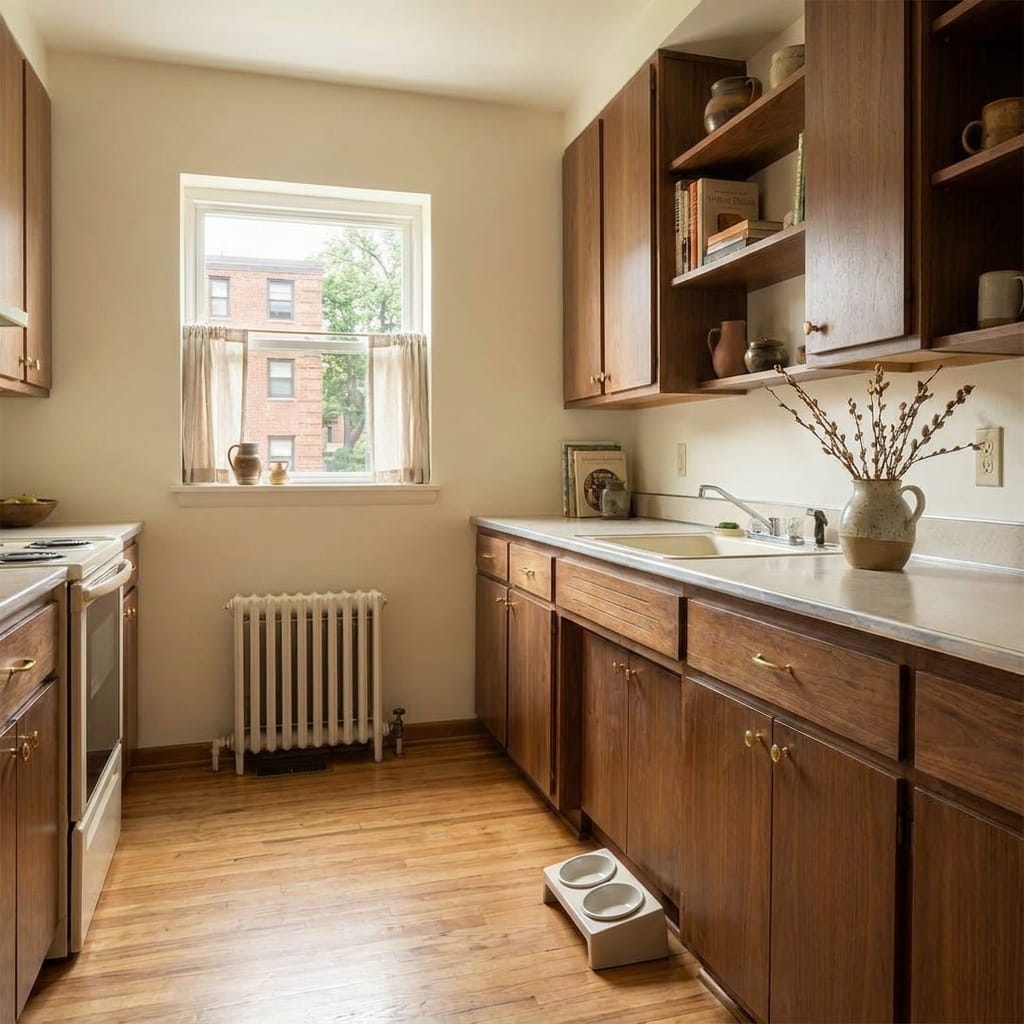
Most feeding setups happen by accident. Two stainless bowls land on a rubber mat by the fridge, a bag of kibble leans against the wall, and that becomes the cat’s corner: the one spot in an otherwise considered kitchen that looks like it was assembled in the pet-store parking lot. Your cat doesn’t mind. You, standing in a small apartment where every surface is on display, mind quite a bit.
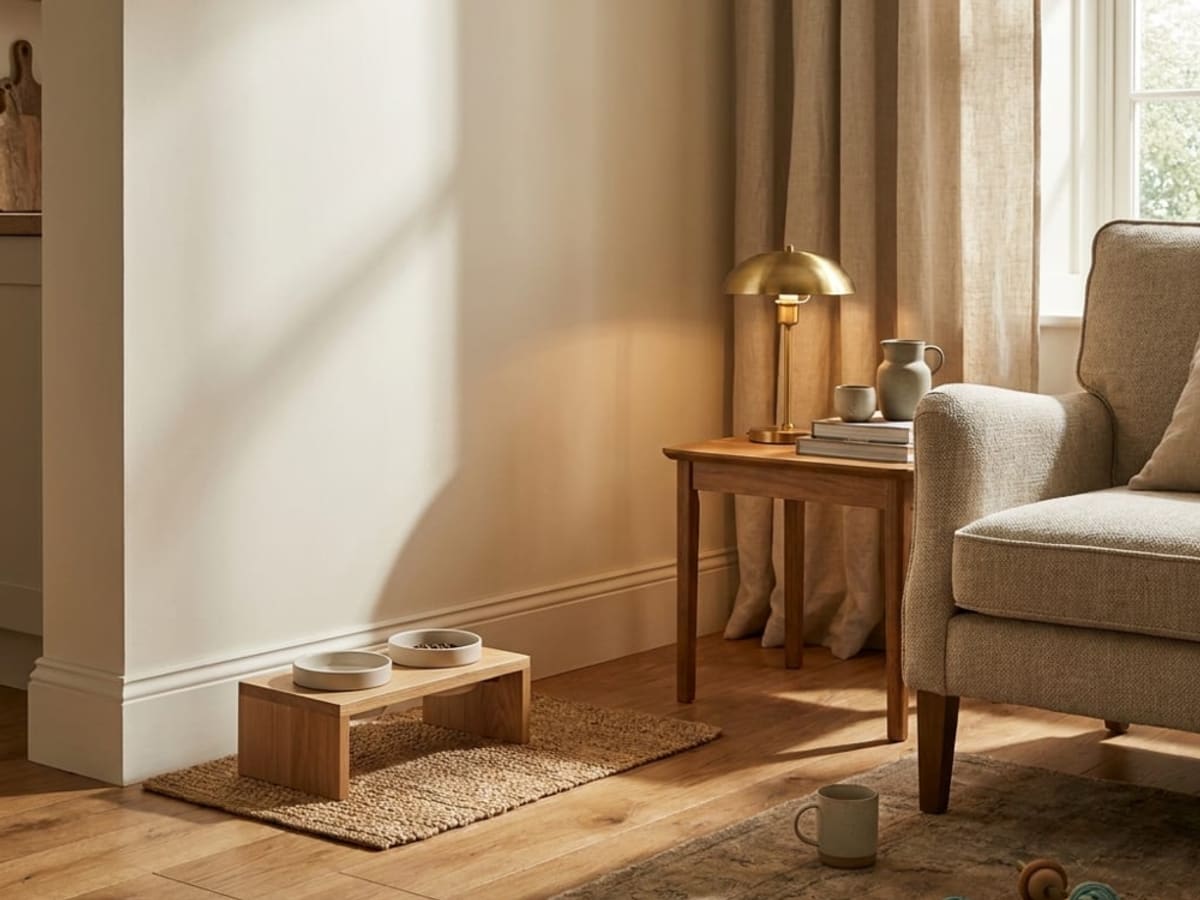
This is the hub page for getting that corner right. A good feeding and hydration station does two jobs at once: it keeps your cat genuinely healthy — eating in comfort, drinking enough water, using clean dishes — and it does so with materials and shapes that read as part of your home rather than an apology in the corner of it. The two goals are not in tension. The same wide ceramic dish that leaves a cat’s whiskers alone also happens to look like a small piece of pottery, and the same low-profile fountain that pulls a reluctant drinker back to the water bowl can be a quiet sculptural object instead of a whirring plastic gadget.
This guide is written for the design-conscious owner in a small space, where there’s no spare room to hide the ugly stuff and the feeding station has to earn its floor. Below, I walk through bowls, raised feeders, fountains and hydration, how to lay the whole thing out in a compact kitchen, and how to keep it hygienic day to day. Each section points you to a dedicated deep-dive when you’re ready to choose specific pieces. Where the evidence is genuinely mixed — and on a couple of popular claims it is — this guide says so rather than selling you certainty that doesn’t exist.
Bowls that don’t wreck the look
The bowl is the foundation, and the material you pick does more than set the look. The two materials worth considering are ceramic and stainless steel. Both are non-porous, food-safe, and easy to keep clean, and both come in shapes that suit a cat’s face. Ceramic brings warmth, weight that resists being shoved around the floor, and a huge range of colors and glazes. Stainless is nearly indestructible, dishwasher-friendly, and reads clean and minimal. Either is a good answer; it mostly comes down to your kitchen and your cat.
The material to avoid is plastic. It scratches easily, and those micro-scratches become grooves where bacteria settle and resist cleaning. Plastic bowls are also the ones most often linked to feline chin acne: the little blackheads some cats get on the chin. Honesty matters here: that link is suspected, not proven. Plenty of vets suggest switching away from plastic when a cat breaks out, and since there’s no real downside to switching, it’s a low-risk move, but don’t treat plastic as a confirmed cause. It’s simply the weakest of the three materials with the least going for it.
Shape matters too. Wide, shallow bowls are often recommended so a cat can eat without pressing its whiskers against the sides. This is the “whisker fatigue” idea: the notion that repeated whisker contact stresses cats at mealtime. It’s plausible and widely repeated, but it remains debated and isn’t firmly established by strong evidence. A wide, shallow dish is a sensible, low-cost choice regardless, so you can follow the advice without buying into the certainty. For the full breakdown of shapes and specific picks, see my roundup of modern cat bowls and raised feeders, and for choosing between the two good materials, my comparison of ceramic vs stainless steel cat bowls.
Raised feeders
A raised feeder lifts the bowl a few inches off the floor so your cat eats with its head and neck in a more level, forward posture instead of hunched down over the ground. The comfort argument is intuitive, and there’s a second practical benefit some owners notice: elevating the dish can slow down fast eaters and reduce the mess that comes from a bowl at floor level getting batted and dragged around.
Raised feeders tend to help most for specific cats rather than every cat. Senior cats with arthritis, larger breeds that fold themselves awkwardly over a floor-level dish, and cats prone to bringing food back up shortly after gulping it are the ones most likely to benefit from the change in posture. For a young, healthy, comfortably-sized cat that eats happily off the floor, a raised feeder is a nice-to-have rather than a fix for a problem, worth it mainly if the design suits your kitchen. As with the whisker question, treat the health claims as reasonable rather than settled, and match the height to your individual cat: the bowl rim should sit roughly at chest-to-lower-neck height, not so high that your cat has to reach up for it.
The bonus is aesthetic. A well-made raised feeder — a wood or bamboo stand cradling two ceramic dishes, or a powder-coated metal frame — is one of the easiest ways to make the feeding corner look intentional, because it turns a couple of bowls on the floor into a single considered object with legs. Many of the best-looking options are covered alongside the flat bowls in my modern cat bowls and raised feeders roundup.
Water fountains and hydration
Hydration is the part of the feeding station most owners underthink, and it’s arguably the most important. Cats evolved from desert animals with a low natural thirst drive, and many simply don’t drink enough from a still bowl, especially cats on dry food, who aren’t getting the moisture that comes built into wet food. Chronic under-drinking is linked to urinary and kidney problems, which makes getting more water into your cat one of the higher-value things this whole setup can do.
A fountain is the most common tool for the job. The theory is that moving, aerated water is more appealing than a still bowl: cats are often drawn to running water, the circulation keeps it fresher, and the larger reservoir means it doesn’t sit stagnant between refills. Here’s the honest part: fountains help some cats and do nothing for others. Some cats take to the moving water immediately and visibly drink more; some ignore the fountain entirely and go back to the bowl; a few are put off by the pump noise. There’s no way to know in advance which cat you have, so treat a fountain as a well-founded experiment rather than a guaranteed fix. If you try one, keep a plain water bowl available alongside it during the transition, and watch whether your cat actually uses it.
If under-drinking is a real concern, stack the odds: offer water in more than one spot, keep bowls away from the food and the litter box, and consider adding wet food to the diet, which raises water intake directly. For how the different pump designs, materials, and noise levels compare — and which are easiest to keep clean — see my roundup of modern cat water fountains.
Setting up the station in a small kitchen
Placement is where a healthy setup and a good-looking one come together. Cats prefer to eat and drink somewhere calm, so pick a quiet corner out of the main traffic path, not the spot right by the trash can or the busiest doorway, where a nervous cat gets interrupted mid-meal. Crucially, keep the food and water well away from the litter box. Cats instinctively avoid eating near where they eliminate, and in a small apartment it’s easy to accidentally crowd the two together simply because floor space is tight.
Give the station an easy-clean floor if you can — tile, sealed wood, or vinyl rather than a rug that soaks up every splash — and put a mat underneath to catch stray kibble, water drips, and the inevitable fountain splash. A mat also visually corrals the whole setup into one defined zone, which reads as tidier than bowls scattered loose across the floor. Choose one in a material and color that suits the kitchen; a plain silicone or woven mat disappears far better than a novelty pet-print one.
If you have more than one cat, spacing matters more than most people expect. Cats don’t love eating shoulder to shoulder, and a crowded shared station can create low-grade tension or let one cat guard the food. Where space allows, give each cat its own bowl with a little distance between stations, and offer water in more than one location so nobody has to pass a housemate to get a drink. Getting the layout right is really the same problem as arranging the rest of a compact home around a cat: my cat-friendly living room ideas covers that thinking in more depth for the spaces beyond the kitchen.
Materials and hygiene
Whatever you buy, the day-to-day routine is what actually keeps your cat healthy, and it’s simpler than it sounds. Both ceramic and stainless steel are easy to keep hygienic because neither is porous: bacteria have nowhere to burrow. The one caveat with ceramic is the glaze. As long as it’s intact, ceramic wipes clean beautifully, but a bowl with a cracked or crazed glaze should be retired, because the fine cracks can harbor bacteria. Stainless has no glaze to fail, which is part of why it’s so hard to wear out.
Build a light routine around it. Wash food bowls daily — cats are messier eaters than they look, and dried food film builds up fast — and most ceramic and stainless bowls are dishwasher-safe, so this can piggyback on the dishwasher you’re already running. Change the water every day rather than just topping it up; stale water and the slick “biofilm” that forms on the sides are a big part of why some cats drift away from a bowl. Fountains need their own attention: rinse the reservoir regularly, clean or replace the filter on schedule, and periodically pull apart the pump to clear the gunk that collects inside, or the moving water you bought for freshness starts working against you.
None of this is demanding, but it’s the quiet difference between a station that keeps a cat drinking and eating well and one that slowly gets ignored. For a deeper look at how the two main bowl materials stack up on exactly these hygiene questions, my ceramic vs stainless steel cat bowls comparison goes further. And if you’re building out the rest of the home to the same standard, this hub sits alongside my broader guide to modern cat furniture.
FAQ
Where should I put my cat’s food and water?
Choose a quiet corner out of the main foot traffic, on an easy-to-clean floor, and well away from the litter box. Cats prefer to eat somewhere calm and undisturbed, and they instinctively avoid eating near where they eliminate. A mat underneath catches spills and keeps the whole setup looking like one defined zone rather than scattered bowls.
Do cats really need a water fountain?
Not strictly, but many cats under-drink, and a fountain is a well-founded way to try to change that, since moving, fresher water appeals to a lot of cats. Be honest with yourself about the outcome, though: fountains help some cats and do nothing for others. Try one, keep a regular bowl available too, and watch whether your cat actually drinks more.
Are raised bowls better for cats?
They can be, especially for senior cats, larger breeds, and cats that gulp their food, because the raised posture is more comfortable and can slow fast eaters. For a young, healthy cat that eats happily off the floor, a raised feeder is more of a nice-to-have than a necessity. Match the height to your cat, with the rim around chest-to-lower-neck level.
Ceramic or stainless steel: which is better?
Both are excellent; neither is porous, both are easy to clean, and both come in whisker-friendly shapes. Ceramic is heavier so it stays put, and offers more colors and warmth; stainless is nearly indestructible and reliably dishwasher-safe. Pick based on your kitchen and your cat rather than a clear winner: my ceramic-vs-stainless comparison walks through the trade-offs in detail.
How far should food be from the litter box?
As far as your space reasonably allows, ideally in a different area of the room or a different room entirely. Cats avoid eating near where they eliminate, so crowding the two together can put a cat off its food or its water. In a small apartment where floor space is tight, this is one of the easiest layout mistakes to make by accident.
Should I avoid plastic bowls?
It’s a sensible, low-risk switch. Plastic scratches into grooves that trap bacteria, and it’s the material most often linked to feline chin acne, though that link is suspected rather than proven. Since ceramic and stainless cost little more and clean up better, there’s no real reason to stick with plastic, especially if your cat develops chin breakouts.