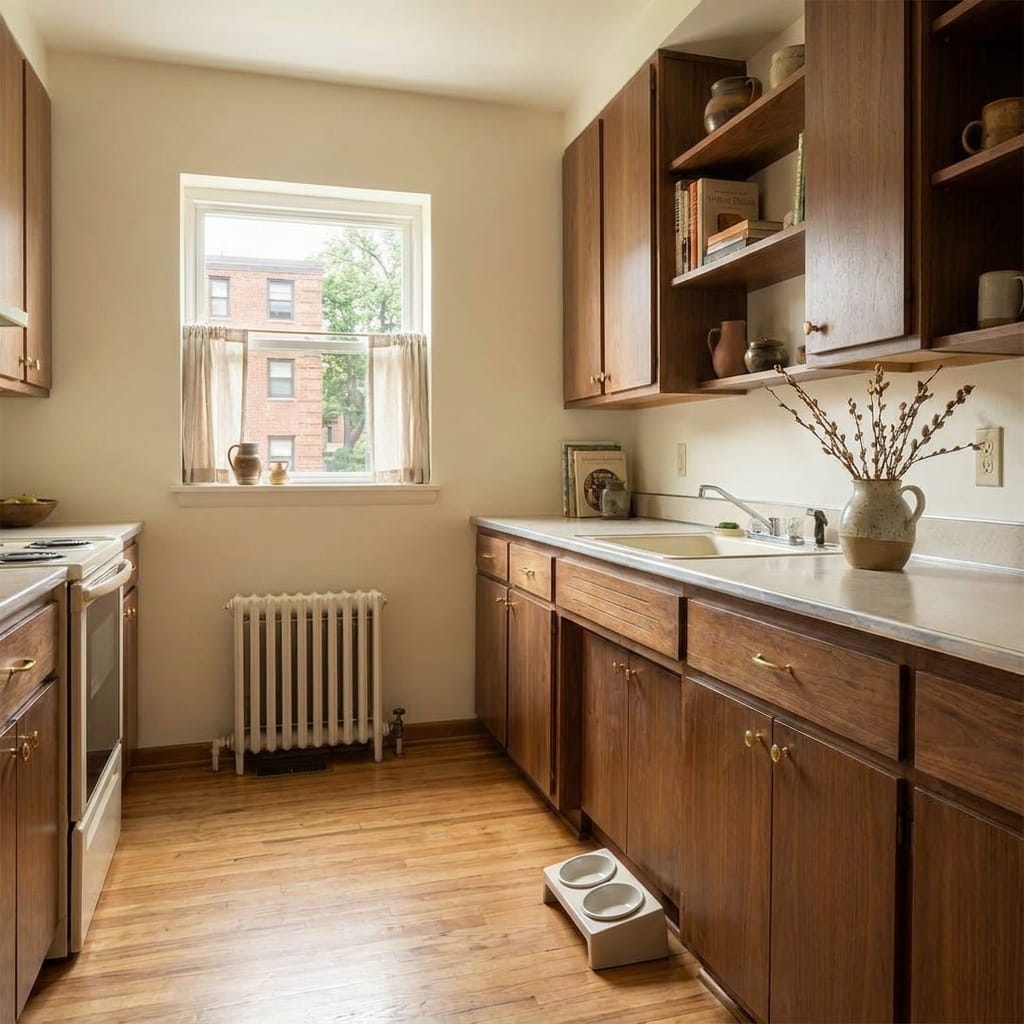
Skip to my pick: Necoichi Elevated Ceramic Bowl (15-degree Tilted, Extra Wide)
The bowl your cat eats from is one of those small, everyday things that quietly matters more than it looks. It sits on the floor twice a day, gets scrubbed constantly, and lives in a spot where bacteria, water, and a cat’s chin all meet. So the material you pick is not just about how it looks under the kitchen light — though that counts too. It affects how clean the bowl actually stays, how long it survives being knocked around, and how comfortable your cat is at mealtime.
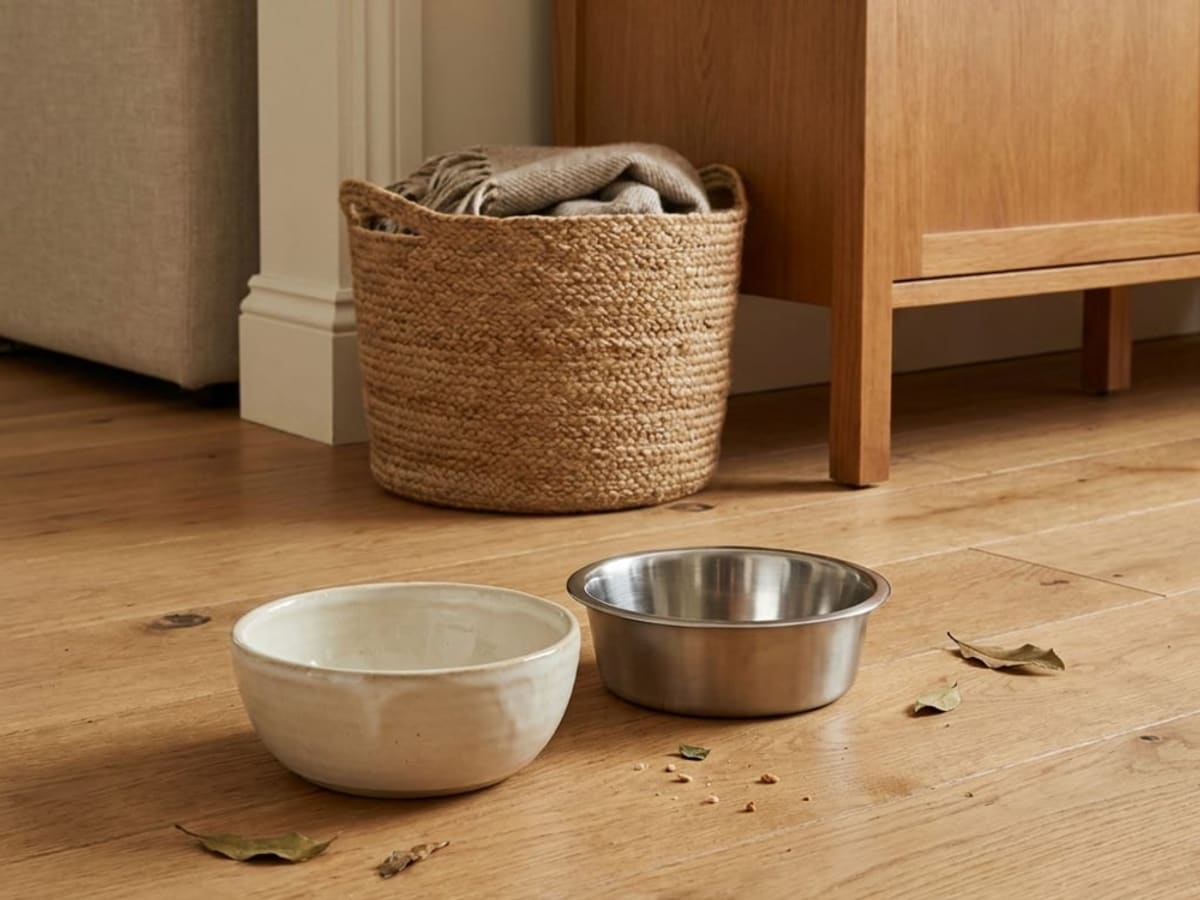
There are really only two materials worth serious consideration: ceramic and stainless steel. Both are non-porous, both are food-safe, and both come in shallow, wide shapes that leave a cat’s whiskers alone. The comparison below is about choosing between two good options, not rescuing you from a bad one.
That said, there is one material to avoid, and it is worth naming up front: plastic. Plastic scratches easily, and those tiny scratches become grooves where bacteria settle in and resist cleaning. Plastic bowls are also the ones most often linked to feline chin acne — the little blackheads some cats get on the chin. The link is not fully proven, but plenty of vets suggest switching away from plastic when a cat develops it, and there is no real downside to doing so. Plastic is cheap and light, and that is about all it has going for it. Skip it.
Ceramic vs stainless steel at a glance
| What matters | Ceramic | Stainless steel |
|---|---|---|
| Hygiene / bacteria resistance | Excellent when the glaze is intact; non-porous and easy to wipe clean | Excellent; non-porous, no glaze to crack, very hard for bacteria to cling to |
| Durability / chipping | Can chip or crack if dropped; a cracked glaze should be retired | Nearly indestructible; dents at worst, does not chip or shatter |
| Weight / tip resistance | Heavy, so it stays put and resists being pushed around | Light on its own; needs a wide base or non-slip ring to stop sliding |
| Whisker-friendly shapes available | Yes, widely available in shallow, wide designs | Yes, though many are deeper; shallow versions do exist |
| Dishwasher safe | Usually yes, if labeled so | Almost always yes |
| Looks in a kitchen | Warm, decorative, lots of colors and finishes | Clean, minimal, modern; less variety in style |
No prices here: those change constantly. Check the current price and the latest reviews on Amazon before you buy any specific bowl.
Ceramic bowls
Pros
- Heavy enough to stay in place, so it resists a nudging paw or an enthusiastic eater.
- Non-porous glazed surface wipes clean and does not hold onto smells.
- Comes in the widest range of colors, shapes, and finishes: easy to match a kitchen.
- Widely available in shallow, wide, whisker-friendly designs.
Cons
- Can chip or crack if dropped or knocked off a counter.
- A crazed or cracked glaze can harbor bacteria, so a damaged bowl should be replaced.
- Cheaper, poorly made ceramics can occasionally use questionable glazes; buy from reputable sellers and look for lead-free, food-safe labeling.
Stainless steel bowls
Pros
- Effectively unbreakable: it may dent, but it will not chip or shatter.
- No glaze to crack, so there is nowhere for bacteria to settle over time.
- Dishwasher-safe and quick to sanitize; a favorite in vet clinics for exactly this reason.
- Lightweight and easy to travel with or carry to the sink.
Cons
- Light weight means it slides or tips unless it has a wide base or a non-slip rubber ring.
- Fewer genuinely shallow, whisker-friendly shapes than ceramic — many are deep.
- Plainer looks; you get clean and minimal, not warm and decorative.
- Some cats are briefly put off by the reflection or the faint metallic sound of tags clinking.
Why not plastic? To repeat the one firm rule: plastic scratches, those scratches trap bacteria, and it is the material most associated with chin acne. Neither ceramic nor stainless has that problem. If you own plastic bowls, replacing them is the single easiest upgrade here.
Which should you choose?
Both materials are genuinely good, so the right pick comes down to what you care about most.
- Looks-first, matching your kitchen. Go ceramic. Nothing else offers the same range of colors, glazes, and shapes, and a nice ceramic bowl reads as a decorative object rather than pet gear.
- Hygiene and lowest maintenance. Go stainless steel. With no glaze to crack and full dishwasher tolerance, it is the easiest material to keep truly clean over years of daily use.
- Households with a bowl-tipper. Go ceramic, or stainless with a heavy non-slip base. A cat who shoves the bowl across the floor is easily defeated by ceramic’s weight; if you prefer steel, make sure it has a wide, rubber-ringed base.
- Whisker-sensitive cats. Prioritize the shape over the material, and ceramic makes shallow-and-wide easier to find. Whisker fatigue — the idea that a deep, narrow bowl bothers a cat’s whiskers — is debated, and the evidence is more owner observation than hard science. But a wide, shallow bowl costs nothing extra and helps if your cat is one of the sensitive ones, so it is a sensible default either way.
If you would like specific shapes to consider, see the roundup of modern cat bowls and raised feeders, which covers both materials and elevated designs. Many cats also drink far more from moving water, so it is worth pairing a good bowl with one of the cat water fountains for hydration. And if you are rethinking the whole setup, the broader guide to modern cat furniture ties the feeding station into the rest of the room.
FAQ
Which is more hygienic, ceramic or stainless steel?
Both are excellent and far better than plastic. Stainless steel has a slight edge for long-term hygiene because there is no glaze that can craze or crack over time — the surface stays smooth for the life of the bowl. Intact glazed ceramic is just as clean day to day; the difference only shows up once a ceramic bowl is chipped or crazed, at which point it should be replaced.
Do ceramic bowls really cause less chin acne than plastic?
The link between plastic and feline chin acne is suspected but not fully proven. What is clear is that ceramic and stainless are both smooth, non-porous, and easy to keep clean, and many vets suggest switching away from plastic when a cat develops chin acne. Both materials here are reasonable choices for a cat prone to it.
Is whisker fatigue a real reason to pick a particular bowl?
Whisker fatigue is a debated idea, and the evidence is mostly owner observation rather than strong research. The practical takeaway is low-risk: a wide, shallow bowl keeps whiskers clear at no extra cost, so it is a sensible default whether or not the effect is significant for your cat. Shape matters more than material here.
Will a stainless steel bowl slide around the floor?
It can, because steel is light. Look for a bowl with a wide, weighted base or a non-slip rubber ring on the bottom, or set it on a small mat. Ceramic avoids this problem naturally thanks to its weight.
Are these bowls dishwasher safe?
Stainless steel is almost always dishwasher safe. Ceramic usually is too, but check the label — some decorative or hand-finished pieces are hand-wash only, and a few can craze in a hot dishwasher over time.
Is a raised or elevated bowl better than a flat one?
Raising a bowl a few inches puts a cat’s head and neck in a more natural line, which many owners find helps older or arthritic cats and those who tend to bring food back up after eating. It is a separate question from material — you can find raised feeders in both ceramic and stainless. See the modern cat bowls and raised feeders roundup for elevated options.