Most cats are terrible about drinking water. It traces back to their desert-cat ancestry: cats evolved to get most of their moisture from prey, so their thirst drive is weak, and a bowl of still water sitting in the corner just does not register as interesting. The problem is that chronic low-level dehydration is hard on feline kidneys and urinary tracts, and those are exactly the systems cats tend to have trouble with as they age. A fountain helps because moving water is more appealing, more oxygenated, and simply more likely to catch a cat’s attention and get them lapping.
The catch is that most cat fountains are aggressively ugly. They are big domes of glossy plastic in colors nobody chose on purpose, and they sit right there on your kitchen floor where you and every guest can see them. Plastic is also the worst material for the job: it scratches, and those micro-scratches trap a slimy biofilm of bacteria that is genuinely hard to scrub out, which is a common culprit behind feline chin acne and funky-smelling water.
So this guide is about getting both things right — a fountain that keeps your cat drinking and looks like it belongs in a room you decorated on purpose. I leaned hard toward ceramic and stainless steel and away from plastic. Here is how I judged every pick:
- Material: ceramic or stainless steel, which resist scratching and biofilm far better than plastic and are kinder to acne-prone chins.
- Looks in a real kitchen: a shape and finish you would not mind a guest seeing on the floor.
- Quiet pump: a submerged, low-vibration pump you cannot hear from the next room, especially at night.
- Easy to clean: dishwasher-safe parts, few pieces, and a design that actually comes apart without a puzzle.
- Capacity and filters: enough water for your household between refills, plus a filter system whose replacements are easy to find.
No prices here: those change constantly, so check the current price and the latest reviews on Amazon before you buy. Where I could not fully confirm a detail, I have said so.
What to check first
The right fountain comes down to material, noise, and how honestly you will keep up with cleaning — looks are the tiebreaker once those are sorted.
Ceramic vs. stainless vs. why not plastic. These are the two materials worth your money. Stainless steel is nearly indestructible, never holds odors, and is the easiest thing to truly sanitize — the safe, practical default. Ceramic usually looks the best in a kitchen and cleans up well too, as long as the glaze is lead-and-cadmium-free, with the tradeoff that it can chip and is heavier. Plastic is the one to avoid: it scratches, those scratches harbor a bacterial biofilm that resists scrubbing, and it is frequently linked to feline chin acne. If your cat has stubborn chin breakouts, switching away from plastic is a common first move. The same material logic applies to the dish your cat eats from, see my cat bowls and raised feeders picks and the deeper ceramic vs. stainless comparison, or fold the water into a full cat feeding station.
Pump noise. A fountain lives with you, often in an open kitchen near where you sleep, so a loud pump is a dealbreaker. The quietest fountains use a fully submerged pump that stays underwater; the noise people complain about is usually a pump running partly dry because the water got low, or vibrating against a hard surface. Keep the reservoir topped up and set the fountain on a mat, and check the latest reviews on Amazon for real-world noise reports before you commit.
Cleaning and disassembly. You will clean a fountain more than you expect — a weekly strip-down and scrub keeps biofilm from building up in the pump and tubing. Fewer parts and dishwasher-safe pieces make the difference between a five-minute job you actually do and a chore you avoid until the water smells. Prioritize a simple design that comes apart without a manual, and always clean inside the pump housing, which is where slime hides.
Filter cost over time. Nearly every fountain uses replaceable carbon or foam filters, usually swapped every two to four weeks. That is an ongoing cost, so before you buy, check that the right filters are easy to find and reasonably priced on the current listing. Proprietary filters that are hard to restock are a real annoyance down the line.
Capacity for your household. Bigger reservoirs mean fewer refills, but also a larger object on your floor. One cat is fine with a 1.5-to-2-liter fountain; two or more cats, or a big drinker, are better served by something in the 2.5-liter-and-up range so it does not run low and let the pump sing.
Comparison at a glance
| Product | Reads as | Made of | |
|---|---|---|---|
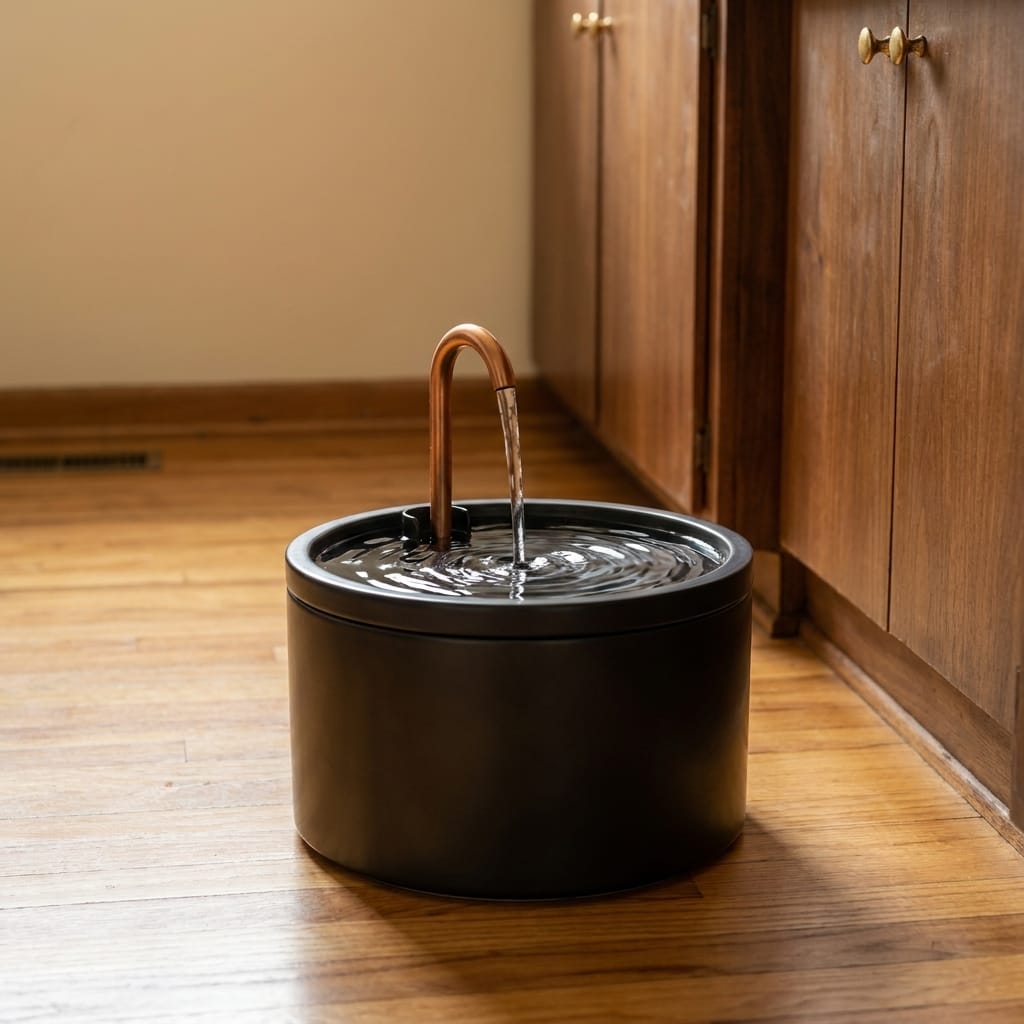 Top pickMISFANS All-Ceramic Fountain Top pickMISFANS All-Ceramic Fountain | Reads as: Ceramic fountain | Made of: All-ceramic body + copper spout | . Genuinely all-ceramic — no plastic reservoir — with a copper spout and a very quiet pump |
 Runner-upVeken Stainless Steel Runner-upVeken Stainless Steel | Reads as: Stainless-top fountain | Made of: 304 stainless top | . Large capacity with an award-winning modern look |
 PETLIBRO Dockstream Cordless PETLIBRO Dockstream Cordless | Reads as: Battery fountain | Made of: Plastic body, stainless tray | . Runs cordless for weeks so there is no cable to hide |
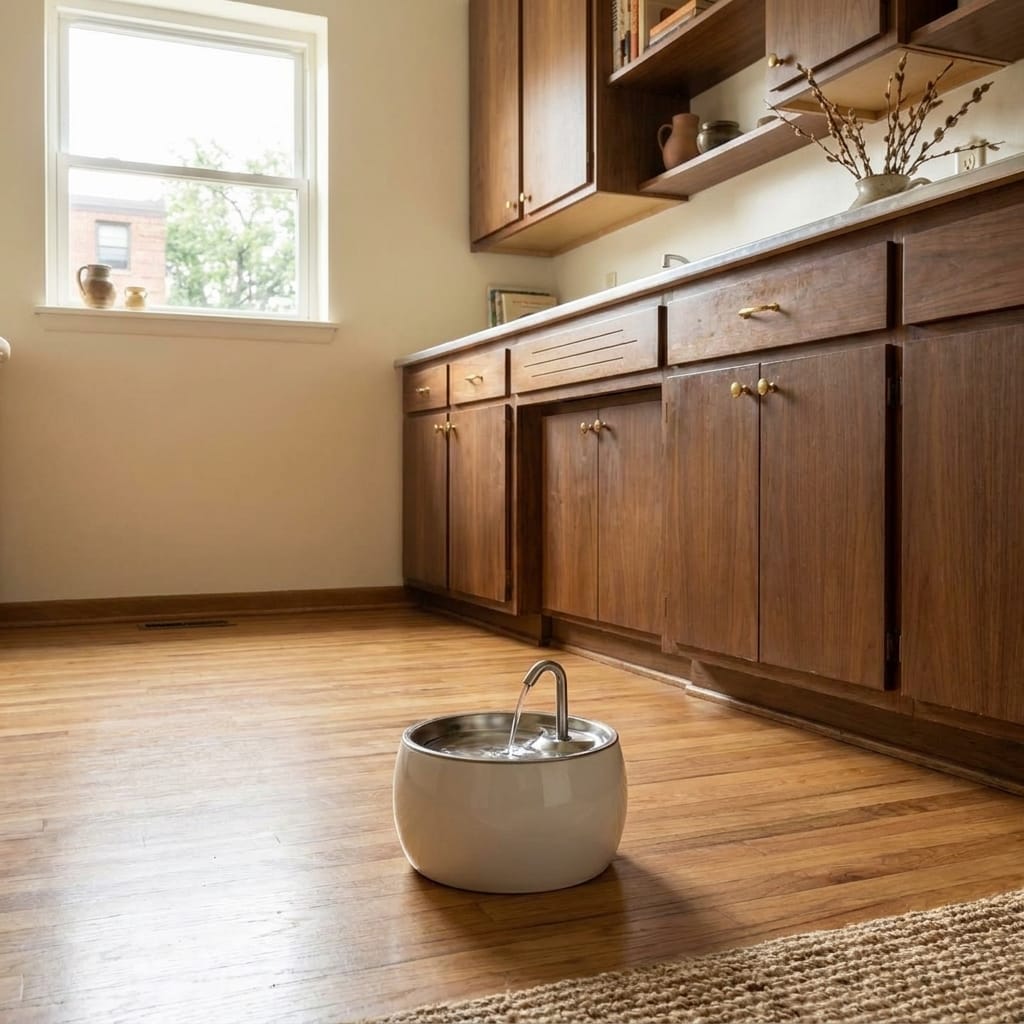 Catit PIXI Stainless Steel Catit PIXI Stainless Steel | Reads as: Stainless-top fountain | Made of: Stainless and plastic | . Three drinking modes to tempt a fussy cat |
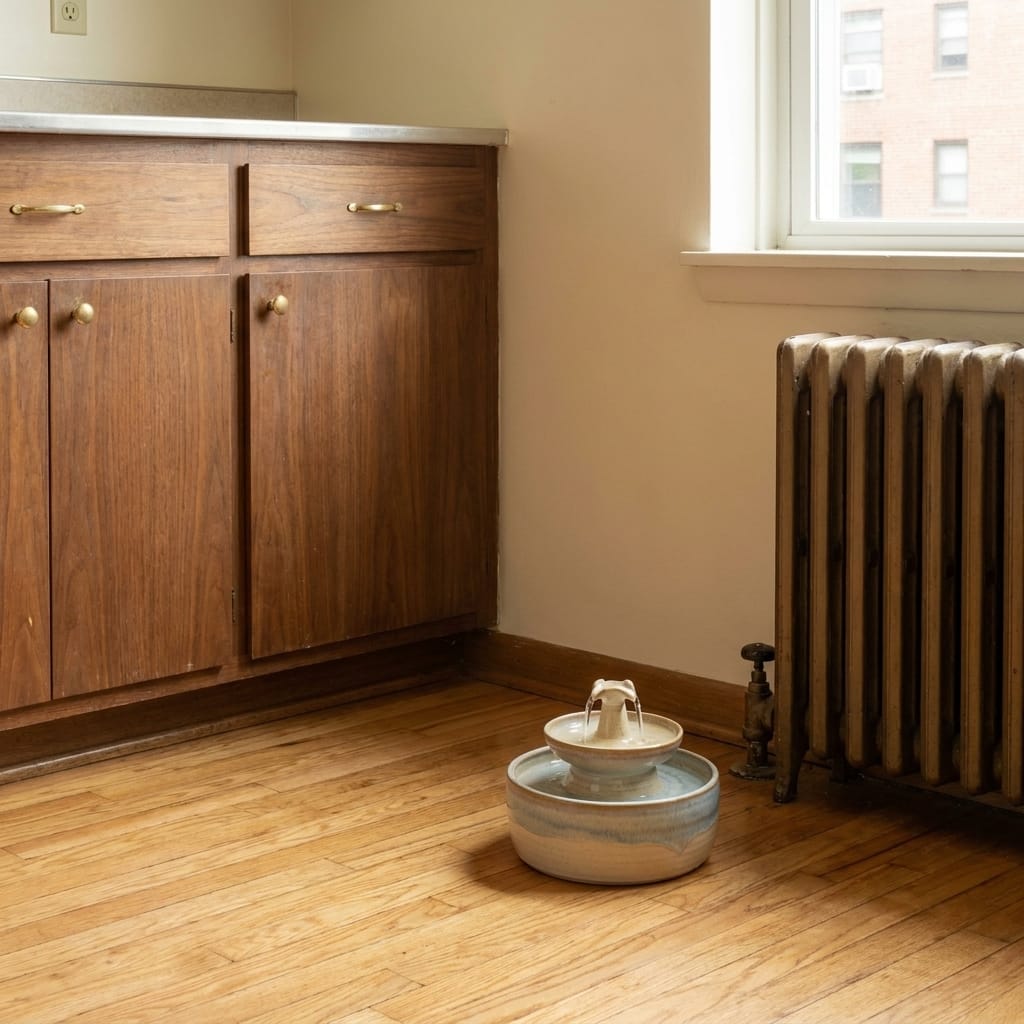 iPettie Tritone Ceramic iPettie Tritone Ceramic | Reads as: Lotus-style fountain | Made of: Natural ceramic | . Lotus-style ceramic with a genuinely quiet pump |
 Wonder Creature Ceramic Wonder Creature Ceramic | Reads as: White ceramic fountain | Made of: BPA-free ceramic | . Simple, smooth ceramic that comes apart fast for washing |
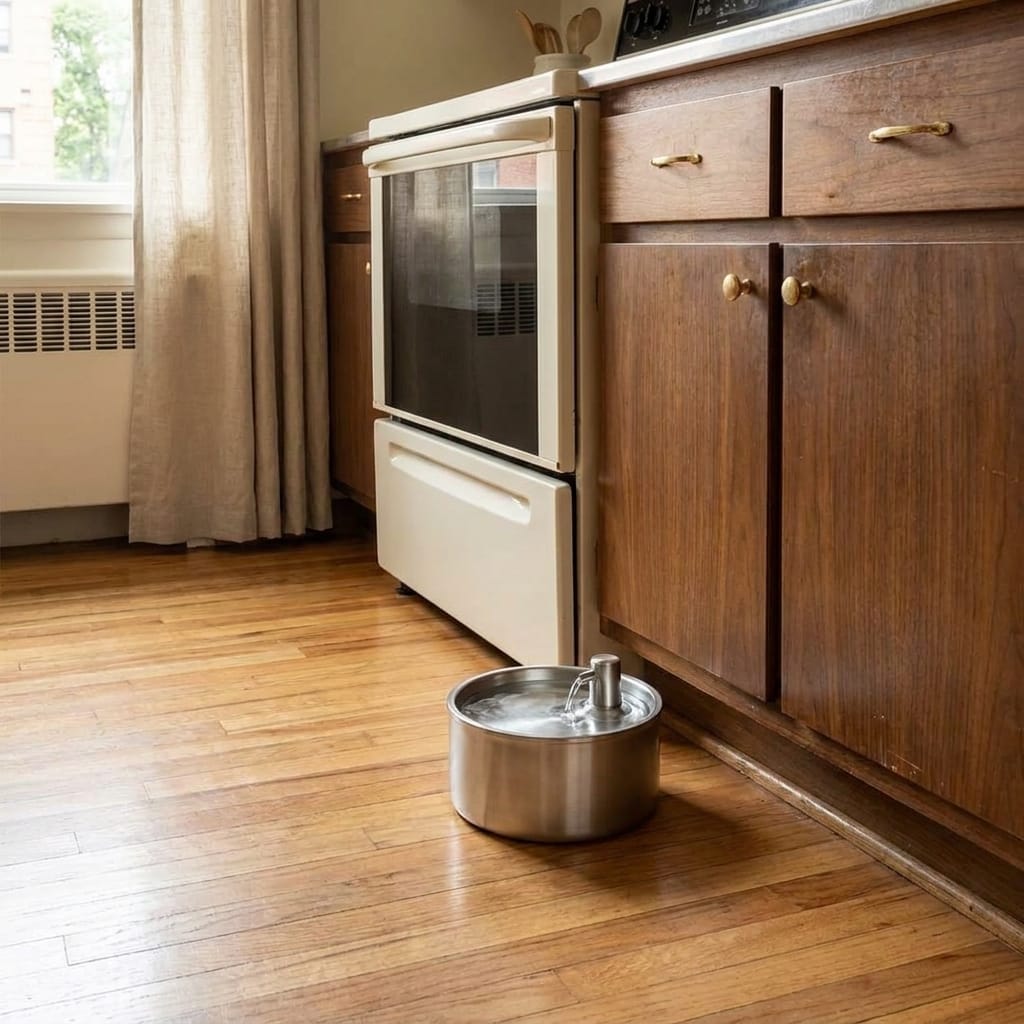 uahpet Stainless Steel Wireless uahpet Stainless Steel Wireless | Reads as: Cord-free fountain | Made of: 304 stainless | . Wireless battery pump with a whisker-friendly shallow tray |
MISFANS All-Ceramic Fountain
This is the pick if you want the fountain to read as a design object. Most “ceramic” fountains are really a ceramic bowl over a plastic reservoir; the MISFANS is an all-ceramic body, finished with a slim gooseneck copper spout that pours a soft arc of water. It holds about 2.1 liters, runs on a pump the brand rates under 20 dB (owners back up that it is genuinely quiet), and offers a faucet-style pour or a gentler fountain mode. A dual-filtration setup handles hair and debris, and it ships with spare filters and a non-slip mat.
- Right for
- A design-forward piece that reads as decor
Before you buy
Ceramic and copper make it a heavier piece; handle it carefully to avoid chips. The shaped ceramic and spout have a few nooks to clean; confirm which parts are dishwasher safe on the current listing.
The others, and why they are not the pick
Every one of these is a real product I would point someone to. None of them is the one I would put in this room, and the specific reason is under each.
AI illustration
PETLIBRO Dockstream Cordless
Right for: A cordless, cord-free look on the counter or floor
- Reads as Battery fountain
- Made of Plastic body, stainless tray
- Maker’s size 8.9 x 7.4 x 6.3 inch (opens in a new tab)
Why it is not the pick: The main reservoir is plastic, not ceramic or all-stainless.
Check price: PETLIBRO Dockstream Cordless — opens Amazon in a new tab
AI illustration
Catit PIXI Stainless Steel
Right for: Picky drinkers who like options
- Reads as Stainless-top fountain
- Made of Stainless and plastic
- Maker’s size 8 x 8 x 6.7 in (opens in a new tab)
Why it is not the pick: The reservoir and housing include plastic; the stainless is mainly the top drinking surface.
Check price: Catit PIXI Stainless Steel — opens Amazon in a new tab
AI illustration
iPettie Tritone Ceramic
Right for: People who want a quiet, decor-first ceramic piece
- Reads as Lotus-style fountain
- Made of Natural ceramic
Why it is not the pick: The sculpted ceramic shape has nooks that take a bit more effort to scrub.
Check price: iPettie Tritone Ceramic — opens Amazon in a new tab
AI illustration
Wonder Creature Ceramic
Right for: A clean white ceramic fountain that is easy to strip down
- Reads as White ceramic fountain
- Made of BPA-free ceramic
Why it is not the pick: Simple styling is understated rather than a statement piece.
Check price: Wonder Creature Ceramic — opens Amazon in a new tab
AI illustration
uahpet Stainless Steel Wireless
Right for: A cord-free stainless fountain with a wide, shallow tray
- Reads as Cord-free fountain
- Made of 304 stainless
Why it is not the pick: Battery operation means periodic recharging to keep it running.
Check price: uahpet Stainless Steel Wireless — opens Amazon in a new tab
FAQ
Are cat water fountains actually worth it?
For most cats, yes. Cats have a naturally weak thirst drive, and moving water is more enticing than a still bowl, so a fountain often gets a reluctant drinker lapping more — which supports kidney and urinary health over the long run. It is not a magic cure, and cats vary, but better hydration is a low-risk win. See how it worked for other owners in the latest Amazon reviews.
Ceramic or stainless steel: which is better?
Both are far better than plastic. Stainless steel is the most hygienic and durable and never holds smells, which makes it the safest choice for a cat with sensitive skin. Ceramic usually looks better in a kitchen and cleans up nearly as easily, as long as the glaze is lead-and-cadmium-free, with the tradeoff that it can chip and weighs more. Pick on looks once you have ruled out plastic.
How often do I need to clean a fountain?
Plan on a full disassembly and scrub about once a week, plus topping up the water in between. That weekly clean, including inside the pump housing, is what prevents the slimy biofilm that causes odors and chin acne. Dishwasher-safe parts and a simple design make this much easier to keep up with.
Are fountains noisy?
A good one is nearly silent. The gentle trickle is by design and most cats like it. Loud humming or buzzing almost always means the water level dropped and the pump is running dry, or the pump is vibrating against a hard floor — topping it up and setting it on a mat usually fixes both. Check recent Amazon reviews for real-world noise notes on any specific model.
How often do I replace the filters, and does it add up?
Most fountains want a new carbon or foam filter every two to four weeks, so it is a modest recurring cost. Before buying, make sure the correct replacements are easy to find and affordable on the current listing — proprietary filters that are hard to restock are the main long-term headache.
Can one fountain serve multiple cats?
Yes, if you size up. For two or more cats, or one heavy drinker, choose a larger reservoir in the 2.5-liter-and-up range so it does not run low between refills. Some households with several cats simply add a second fountain in another room to spread out access.