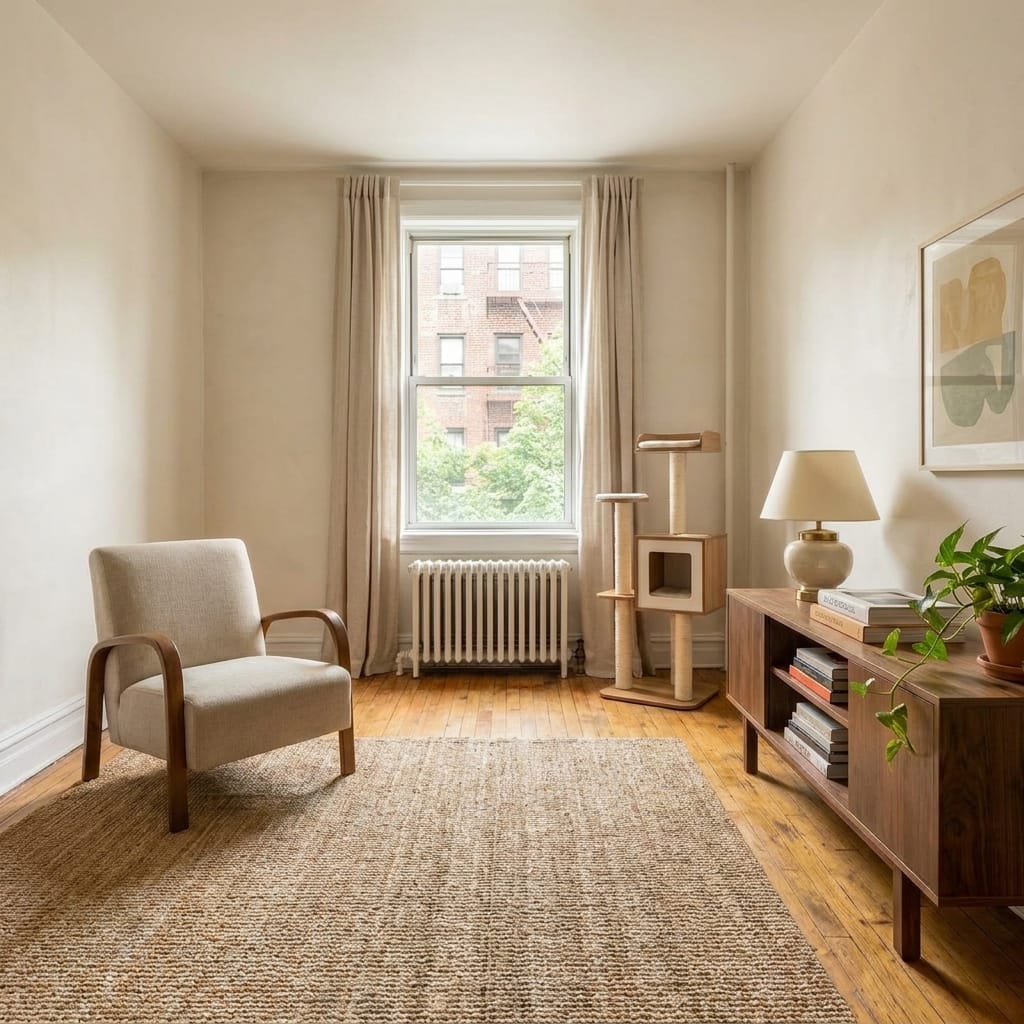
Skip to my pick: Catit Vesper V-High Base (Walnut)
If you have one corner to spare and one cat to keep happy, the choice usually comes down to two shapes: a cat tree or a cat condo. They look similar in thumbnails, they often share a shopping category, and plenty of pieces blur the line. But they solve different problems, and in a small apartment where every square foot is already spoken for, picking the wrong one means you’ve paid for furniture your cat ignores.
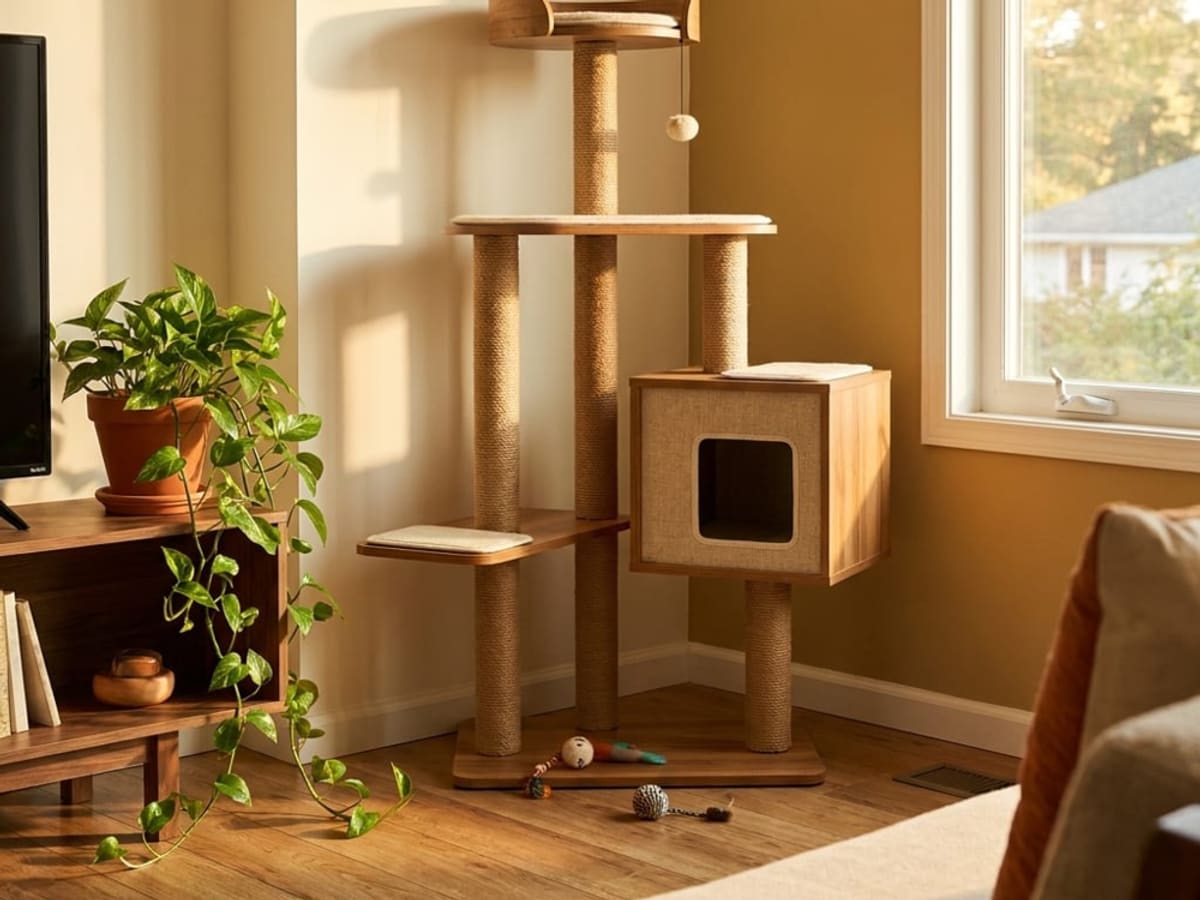
Here’s the short version. A cat tree is a vertical structure — a tall post or set of posts with perches, platforms, and often a sisal-wrapped trunk for scratching. Its whole personality is up: climbing, surveying the room from a high perch, leaping between levels. A cat condo is built around enclosure — one or more cube-shaped hideaways, usually carpeted or plush inside, where a cat can tuck away, nap, and feel unseen. Condos tend to be shorter and wider; trees tend to be taller and narrower. Many products combine both (a condo box at the base, perches climbing above it), but the balance of the design tells you which job it’s really built for.
Why does the distinction matter more in a small space? Because you’re trading floor area for cat happiness, and the two designs spend that trade differently. A tree buys vertical territory without eating much floor. A condo buys security and rest but wants a wider base. Match the shape to your cat and your room and you get a piece that actually gets used. Guess wrong and it becomes a laundry rack.
Cat tree vs cat condo at a glance
| What matters | Cat tree | Cat condo |
|---|---|---|
| Vertical height | Tall; the whole point is climbing and high perches | Usually shorter and lower to the ground |
| Floor footprint | Often a compact base for the height it delivers | Wider footprint for the same amount of “cat space” |
| Enrichment / exercise | Strong (climbing, jumping, and scratching posts) | Modest (mostly rest, with less to climb) |
| Hiding / coziness | Limited unless it includes an enclosed box | Strong (enclosed cubbies are the main feature) |
| Multi-cat suitability | Good if it has several separated perch levels | Good if it has multiple separate hideaways |
| Looks / decor | Ranges from sculptural and furniture-like to bulky | Often reads as a soft, boxy pet item |
Treat the table as tendencies, not laws. A well-designed hybrid can score well in more than one row, and a cheap example of either type can underdeliver on all of them. Read the actual dimensions and photos before you buy — a “tree” that’s only three feet tall isn’t buying you much vertical territory, and a “condo” with a single cramped box isn’t much of a hideaway.
Cat tree: pros and cons
Pros
- Adds vertical territory, which is exactly what cats crave and what small floors lack.
- Encourages real exercise: climbing, jumping, and stretching.
- Usually includes sisal or jute posts, so it doubles as a scratching station.
- A tall, narrow model can fit a corner without dominating the room.
Cons
- Taller pieces can wobble if the base is too small or the build is flimsy — stability matters.
- Open perches don’t give a nervous cat anywhere to hide.
- Height can be intimidating for kittens, seniors, or cats with mobility issues.
Cat condo: pros and cons
Pros
- Enclosed cubbies give shy or anxious cats a genuine retreat.
- Lower profile suits cats who don’t climb much, including older ones.
- Cozy, den-like resting spots many cats gravitate to for naps.
- Generally low and stable, with less tip risk than a tall tower.
Cons
- Takes more floor for the amount of usable space it offers.
- Less climbing and jumping means less exercise and enrichment.
- Carpeted, boxy designs can look more “pet store” than furniture.
- Limited vertical territory in a space where vertical is the scarce resource.
Which should you get?
Small apartment, tight on floor space: Lean toward a cat tree. Vertical is the resource you’re short on, and a tall, narrow tower turns unused air into cat territory while barely touching your floor. If your cat also likes to hide, look for a tree that builds in one enclosed box near the base — that gets you most of a condo’s benefit without a second piece of furniture.
Shy or anxious cat: A condo usually wins. The enclosed cubbies give a nervous cat a place to feel safely out of sight, which does more for a stressed cat than a high perch out in the open. Place it somewhere quiet, away from the front door and foot traffic.
Multiple cats: Go by the design, not the label. What matters is separate spaces so cats aren’t forced to share — a tree with several perches at different heights lets cats stake out their own level, while a condo with two or more distinct hideaways gives each cat a private den. A single-box condo or a single-perch tree will just start turf disputes.
Large or heavy cats: Prioritize stability and perch size over height. Big cats need a sturdy, wide base and perches they actually fit on rather than overhang. A lower, solidly built condo or a heavy-based tree beats a tall, spindly tower that sways every time a fifteen-pound cat lands the top platform.
If decor is part of the decision, it’s worth knowing the tree category has come a long way — see my roundup of modern cat trees for towers that read as real furniture instead of carpet monoliths. And if floor space is genuinely the constraint, consider skipping floor furniture altogether: wall-mounted cat shelves are the ultimate space-saver, giving your cat a full climbing route while using zero square footage on the ground. For the bigger picture on outfitting a small home, my guide to modern cat furniture covers how the pieces fit together.
FAQ
Is a cat tree or a cat condo better for a small apartment?
For most small apartments, a cat tree makes better use of space because it builds upward rather than outward. Vertical territory is exactly what small floors lack, so a tall, narrow tree gives your cat more usable space per square foot of floor. A condo is the better pick if your cat rarely climbs or strongly prefers to hide.
What’s the actual difference between a cat tree and a cat condo?
A cat tree is a vertical structure focused on climbing — tall posts, perches, and scratching surfaces. A cat condo is focused on enclosure — one or more cube-shaped hideaways for resting out of sight. Trees emphasize height and exercise; condos emphasize coziness and security. Many products combine elements of both.
Can one piece of furniture be both a tree and a condo?
Yes. Plenty of designs put an enclosed condo box at the base and stack perches above it, giving you climbing and hiding in a single footprint. That hybrid is often the smartest choice for a small apartment because it covers both needs without requiring two separate pieces.
Which is better for a shy cat?
A condo generally suits a shy cat better because the enclosed cubbies offer a place to feel hidden and safe. Put it in a calm, low-traffic spot rather than near the entryway. If you prefer a tree, choose one that includes at least one enclosed box so your cat still has somewhere to retreat.
Do cat trees tip over easily?
They can if the base is too small for the height or the construction is flimsy, especially with a larger cat. Look for a wide, heavy base and solid materials, and check whether the model can be anchored to a wall. A stable tree stays planted when a cat leaps onto the top perch.
Is a cat tree or condo better for multiple cats?
Either can work as long as it provides separate spaces so cats don’t have to share. For a tree, that means several perches at different heights; for a condo, it means multiple distinct hideaways. Judge the specific design by how many separated resting spots it offers, not by whether it’s called a tree or a condo.