Here is the one thing no cat owner can negotiate their way out of: a cat is going to scratch. It is how they shed the outer sheath of a claw, mark territory, and stretch out the whole length of their spine. The only real choice you get is what they scratch. Give them nothing they like and the answer is the sofa arm, the rug, or a doorframe. Give them the right post or lounge and, more often than not, they leave the furniture alone.
Scratchers used to look like they belonged in a garage — beige carpet posts and neon cardboard wedges. That has changed. There is now a whole category built to read as decor: sculptural cardboard loungers, minimalist sisal posts on solid bases, and furniture-style pieces in walnut and oak tones. The catch is that “looks good” and “the cat will use it” are two different tests, and a scratcher has to pass both.
I judged each pick on what matters once it is living in your house:
- Will the cat actually use it: enough height for a full vertical stretch, or a good angle for horizontal scratchers?
- Durability: quality of the sisal weave or density of the cardboard, and how long it lasts before it looks chewed up.
- Stability: a heavy, wide base so it does not wobble or tip mid-scratch, the fastest way to make a cat quit a post.
- Looks: does it genuinely blend with modern decor, or is it a pet product in a nicer color?
- Replaceable or refillable parts: bonus when you can flip, refill, or swap the worn surface instead of buying a whole new unit.
No prices here: those change constantly, so check the current price and the latest reviews on Amazon before you buy. Where I could not fully confirm a detail, I have said so.
Getting it right
A gorgeous scratcher your cat ignores is just an ornament. Match the piece to how your cat actually scratches, and get the boring mechanics right.
Vertical vs. horizontal vs. incline. Watch your cat. Reaching up the sofa arm or a doorframe means they want a tall post; clawing the rug means they scratch horizontally and prefer a flat lounge or pad. Incline scratchers split the difference, and many homes benefit from one of each. If your cat likes to climb as much as scratch, many modern cat trees build a sisal post right into the frame, and for pulling the whole room together, see my cat-friendly living room guide.
Height for a full stretch. For posts, height is the single most important spec. A cat wants to reach up and pull down through the full length of the spine, so a post that is too short gets snubbed. Bigger cats need taller posts.
Sisal vs. cardboard durability. Woven sisal is the most durable surface and holds up to years of hard scratching. Cardboard is cheaper and a texture many cats love, and the good ones are reversible or refillable — but it wears faster and sheds flecks. It is a trade of longevity against cost and texture.
Sturdiness and base weight. A post that wobbles or tips even once can teach a cat to distrust it for good. Prioritize a wide, heavy base and, where offered, an anti-tip kit or wall anchor. Horizontal scratchers sidestep the tipping problem entirely.
Placement. Put the scratcher where the cat already wants to scratch: next to the targeted sofa, near a favorite nap spot, or by a doorway they use. One placed in the path of daily life gets used far more than one hidden in a spare room.
Comparison at a glance
| Product | Reads as | Made of | Scratches |
|---|---|---|---|
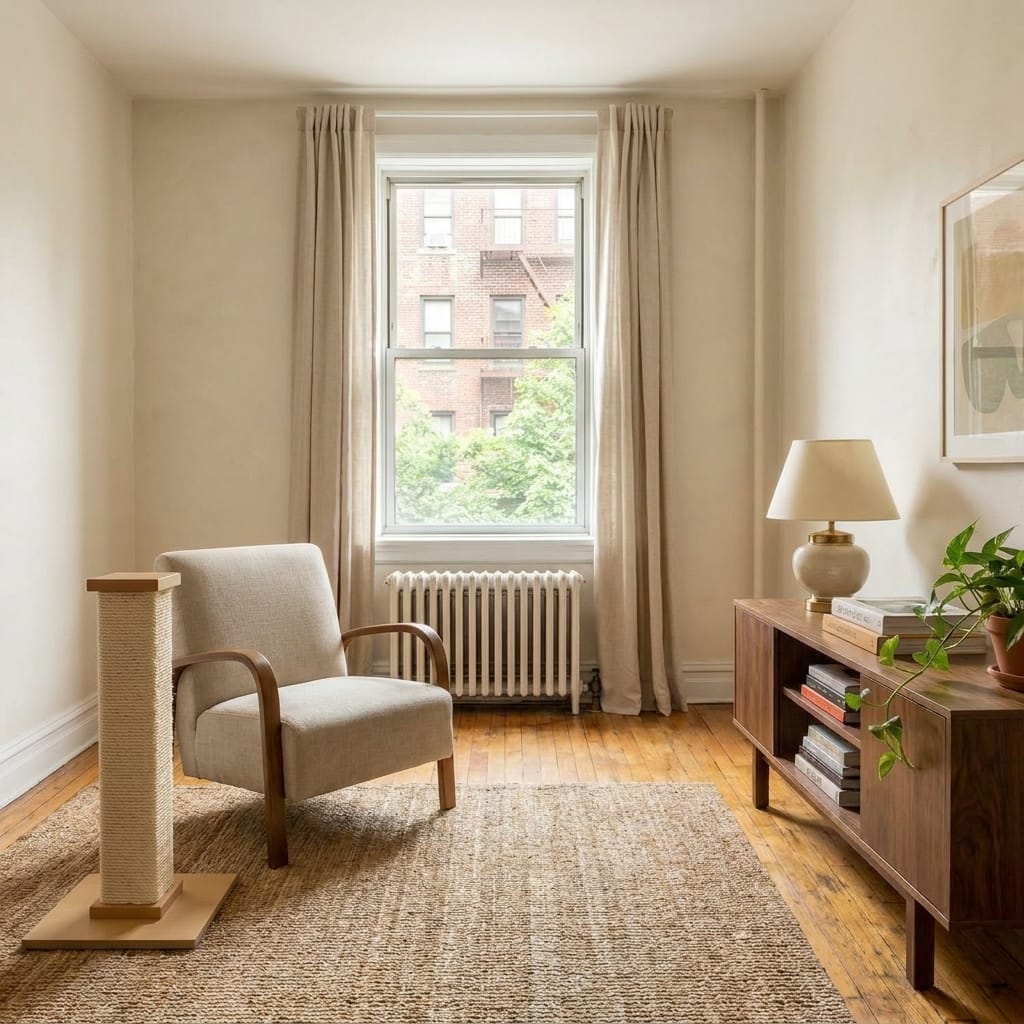 Top pickSmartCat Ultimate Scratching Post Top pickSmartCat Ultimate Scratching Post | Reads as: Minimalist tall post | Made of: Woven sisal fiber | Scratches: Vertical, full stretch. Maker’s size: 16″ x 16″ base, 32″ height (opens in a new tab). Tall, heavy-based post that stays rock-steady |
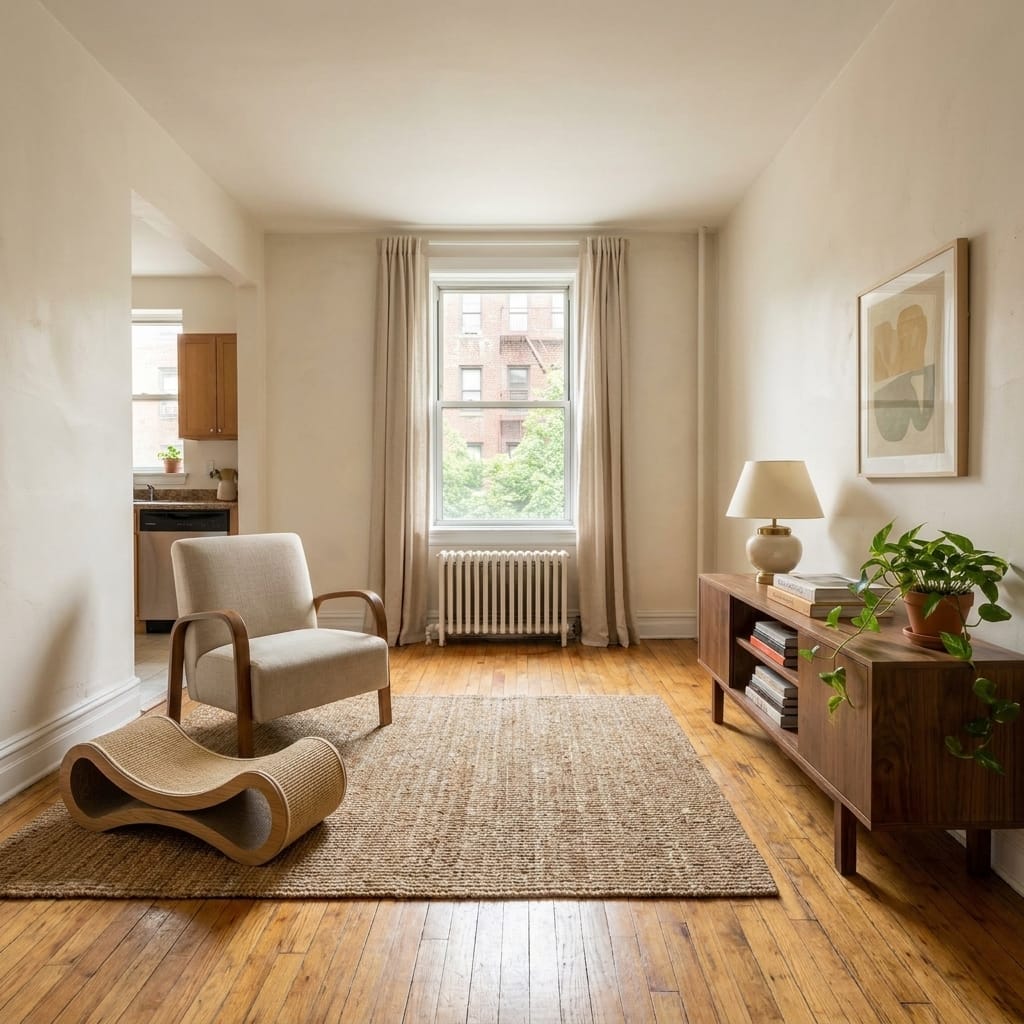 Runner-upPetFusion Ultimate Cat Scratch Lounge Runner-upPetFusion Ultimate Cat Scratch Lounge | Reads as: Sculptural lounge | Made of: Recycled corrugated cardboard | Scratches: Horizontal curve, reversible. Reversible curve that doubles the usable life |
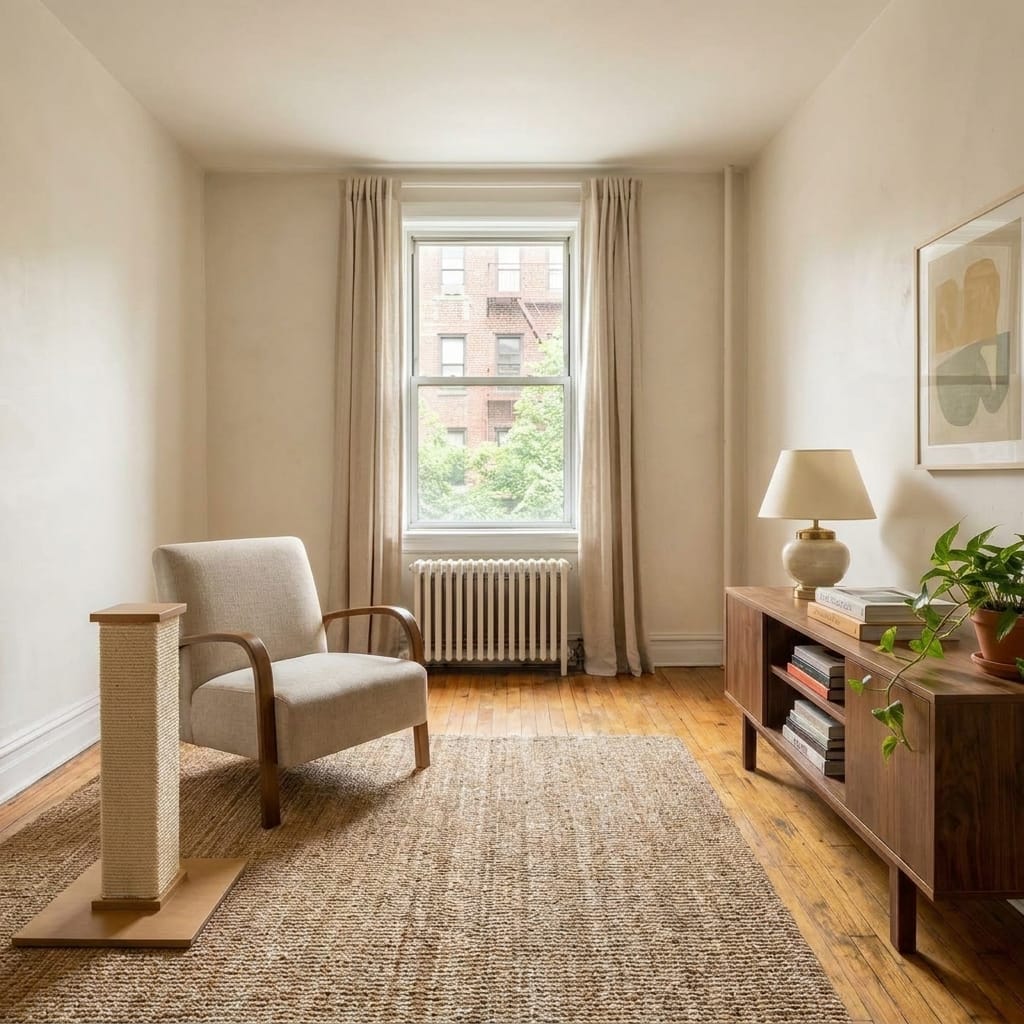 Catit Vesper V-Base Catit Vesper V-Base | Reads as: Cat tree | Made of: Walnut-tone MDF + sisal | Scratches: Vertical, plus somewhere to sit. Maker’s size: 33.2 x 22.1 x 22.1 in (opens in a new tab). Reads as real furniture, with replaceable parts |
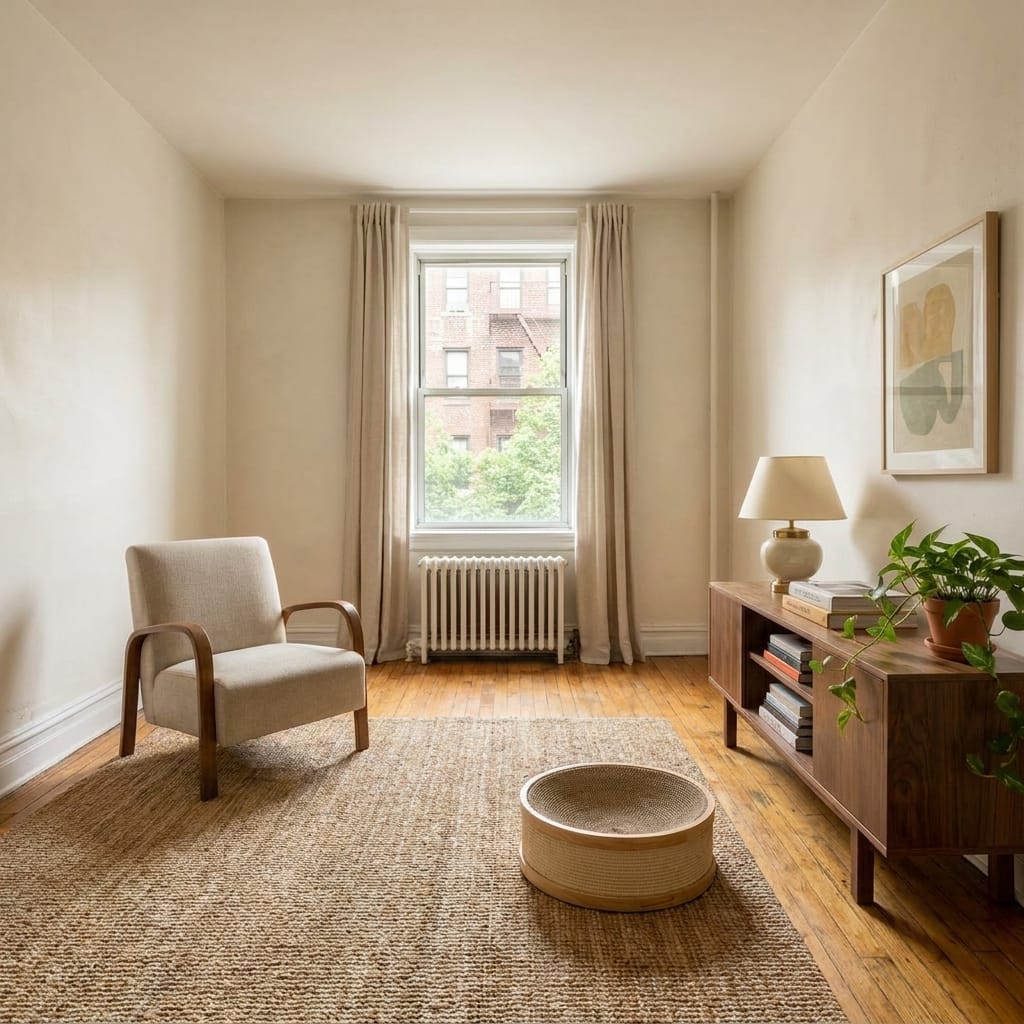 Necoichi Cozy Cat Scratcher Bowl Necoichi Cozy Cat Scratcher Bowl | Reads as: Sculptural bowl | Made of: Recycled cardboard | Scratches: Horizontal bowl, doubles as a bed. Curved bowl that is also a napping spot |
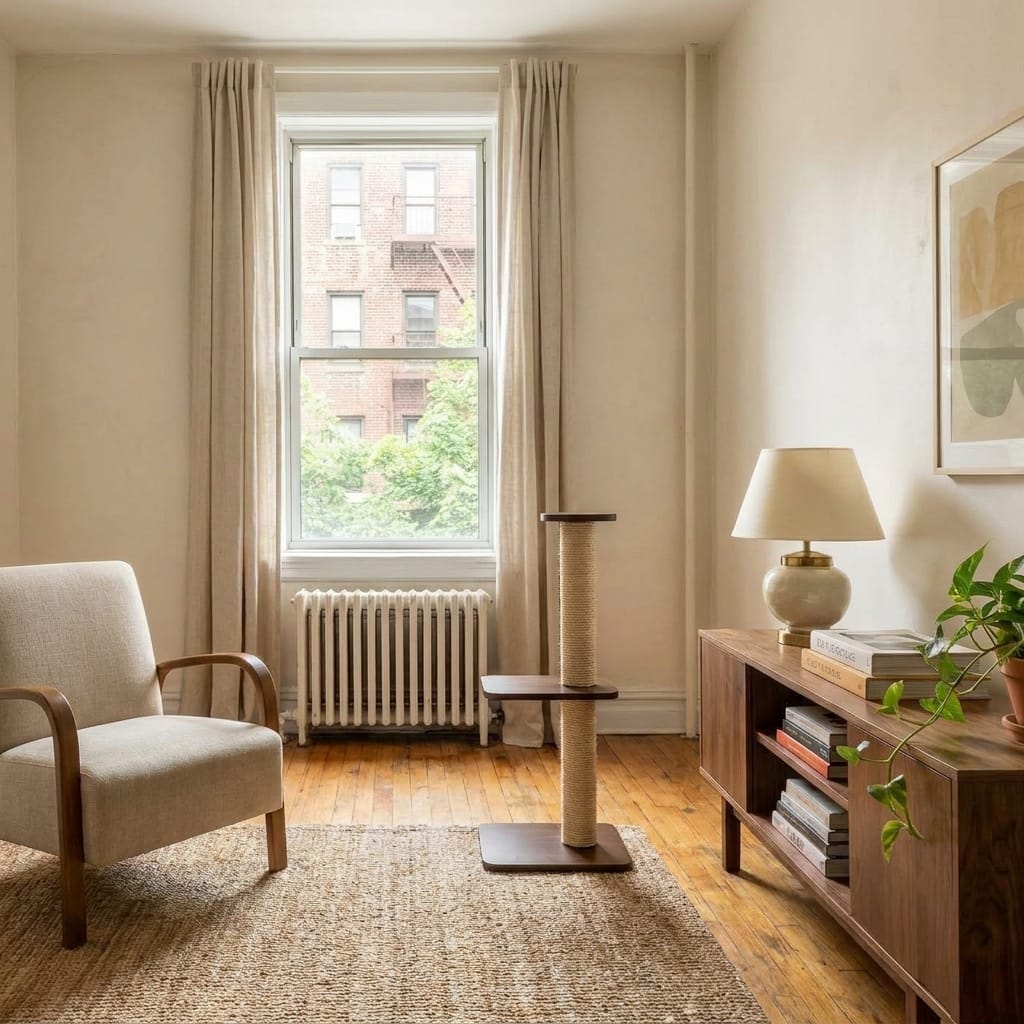 FEANDREA Cat Scratching Post FEANDREA Cat Scratching Post | Reads as: Post with perch | Made of: Woven sisal + plush | Scratches: Vertical, with a perch. Maker’s size: 17.7”L x 15.7”W x 27.9”H (opens in a new tab). Anti-tip kit and a washable perch cover |
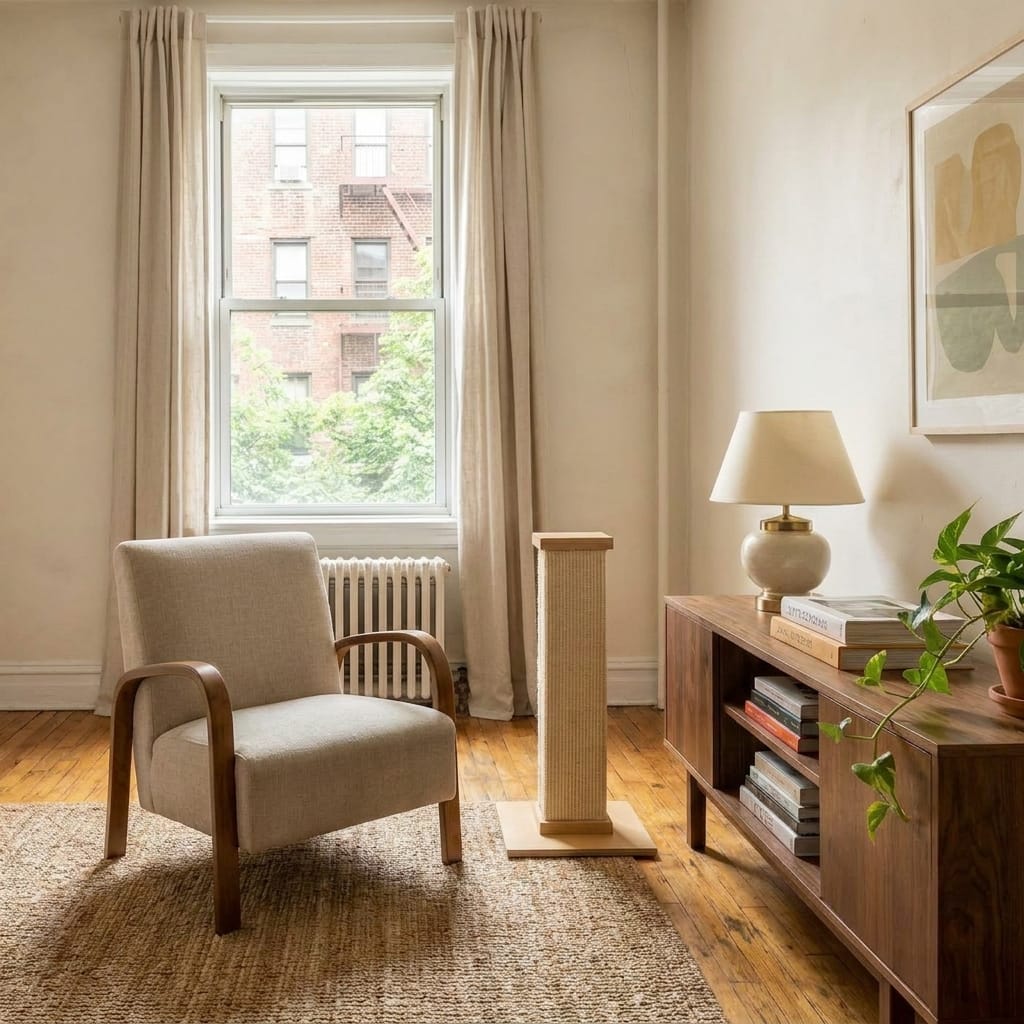 Way Basics Vertical Cat Scratcher Way Basics Vertical Cat Scratcher | Reads as: Standing pad | Made of: Recycled zBoard paperboard | Scratches: Vertical pad, reversible. Maker’s size: D 13.2” H 27.9” W 11.4” (opens in a new tab). Tool-free, sustainable, reversible pad |
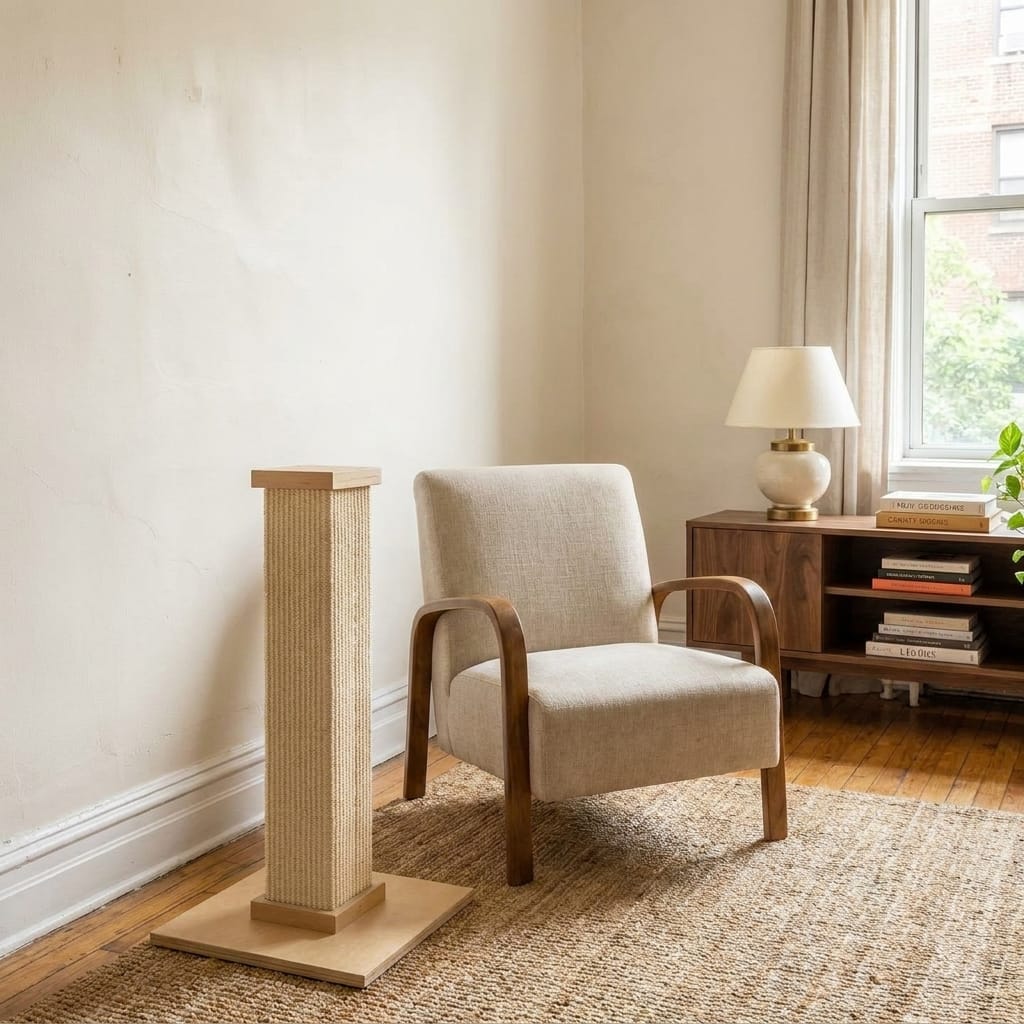 Trixie Parla Scratching Post Trixie Parla Scratching Post | Reads as: Compact post | Made of: Natural rope + fabric base | Scratches: Vertical, short of a full stretch. Maker’s size: Floor area 15.7 × 15.7 in., height 24.4 in. (opens in a new tab). Understated silhouette in neutral tones |
SmartCat Ultimate Scratching Post
For a vertical scratcher, height and stability are everything, and this is the post reviewers reach for again and again. It stands tall enough for most adult cats to reach into a full-body stretch, and it sits on a wide, weighted base that does not rock or tip. The covering is woven sisal fiber rather than rope, which many owners find lasts longer and frays less.
- Right for
- Vertical scratchers who want a full stretch
Before you buy
The look is understated rather than a design statement. The sisal is not user-replaceable, so a fully worn post means a new post; confirm current details on the latest Amazon listing.
The others, and why they are not the pick
Every one of these is a real product I would point someone to. None of them is the one I would put in this room, and the specific reason is under each.
Measure first, for any of these: your cat’s full stretch, against the post’s height on the current listing.
AI illustration
Catit Vesper V-Base
Right for: People who want a furniture-first piece
- Reads as Cat tree
- Made of Walnut-tone MDF + sisal
- Maker’s size 33.2 x 22.1 x 22.1 in (opens in a new tab)
Why it is not the pick: Engineered wood (MDF) rather than solid wood; keep it dry.
Check price: Catit Vesper V-Base — opens Amazon in a new tab
AI illustration
Necoichi Cozy Cat Scratcher Bowl
Right for: Small spaces and cats who nest while scratching
- Reads as Sculptural bowl
- Made of Recycled cardboard
Why it is not the pick: Cardboard shed is a reality; expect to sweep up flecks.
Check price: Necoichi Cozy Cat Scratcher Bowl — opens Amazon in a new tab
AI illustration
FEANDREA Cat Scratching Post
Right for: Vertical scratcher with a perch
- Reads as Post with perch
- Made of Woven sisal + plush
- Maker’s size 17.7”L x 15.7”W x 27.9”H (opens in a new tab)
Why it is not the pick: The plush-and-post look is more “cat furniture” than minimalist decor.
Check price: FEANDREA Cat Scratching Post — opens Amazon in a new tab
AI illustration
Way Basics Vertical Cat Scratcher
Right for: Eco-minded, minimalist rooms
- Reads as Standing pad
- Made of Recycled zBoard paperboard
- Maker’s size D 13.2” H 27.9” W 11.4” (opens in a new tab)
Why it is not the pick: Paperboard is less durable long-term than woven sisal; heavy scratchers go through pads faster.
Check price: Way Basics Vertical Cat Scratcher — opens Amazon in a new tab
AI illustration
Trixie Parla Scratching Post
Right for: Clean, neutral minimalist spaces
- Reads as Compact post
- Made of Natural rope + fabric base
- Maker’s size Floor area 15.7 × 15.7 in., height 24.4 in. (opens in a new tab)
Why it is not the pick: Shorter height means a big cat may not get a full stretch.
Check price: Trixie Parla Scratching Post — opens Amazon in a new tab
FAQ
Should I get a vertical or horizontal scratcher?
Let your cat decide. Sofa arms and doorframes mean vertical; rugs and carpet mean horizontal. When in doubt, offer both — plenty of cats happily use a tall sisal post and a flat cardboard lounge for different moods.
How long does sisal last compared to cardboard?
Woven sisal is more durable by a wide margin and can hold up for years. Cardboard wears faster, but many cardboard scratchers are reversible or refillable, so you flip or swap the surface rather than replacing the whole thing. Actual lifespan depends on how hard your cat scratches; check the latest reviews on Amazon for real-world wear reports.
How do I get my cat to actually use a new scratcher?
Place it where they already scratch, not tucked away. Rub a little catnip or silvervine on it, dangle a toy near it, and reward your cat when they use it. If they are attacking a specific piece of furniture, put the scratcher right beside it.
Do scratchers really save the sofa?
Often, yes — but only if the cat prefers the scratcher to the sofa. That means the right type, enough height, a stable base, and good placement. Pair it with gentle deterrents on the furniture while the cat builds the new habit.
Why does my cat keep tipping the post over?
Almost always a base problem. Lightweight posts with narrow bases tip when a big cat leans in, and one tip can put a cat off for good. Choose a wide, heavy base or an anti-tip kit, and place it against a wall.
Can a scratcher genuinely look like decor?
Yes. Sculptural cardboard loungers, walnut-tone furniture-style pieces, and minimalist sisal posts all read as intentional design objects. The trick is choosing one that also passes the “will my cat use it” test — looks alone will not protect your furniture.