You spent months getting the living room right — the rug, the console, the plants — and then there it is in the corner: a big plastic litter box that announces “a cat lives here” to every guest before they’ve even sat down. The litter box is non-negotiable. The eyesore doesn’t have to be.
A good litter-box enclosure solves this by hiding the pan inside a piece that reads as actual home decor — a side table, a bench, a low console, a shaker-style cabinet. (For non-furniture approaches too, see my full guide to hiding a litter box.) Done well, nobody clocks it as a litter box at all. Done badly, you get a cramped box your cat refuses to use, a lid that traps odor, and a cabinet you dread cleaning.
I looked at the enclosures cat owners actually recommend. The first test is whether a piece genuinely looks like furniture, not a plastic hut with a cat door; everything that passed was then judged on the practical checks in the buying notes below.
No prices here: those change constantly, so check the current price and the latest reviews on Amazon before you buy. Where I couldn’t fully confirm a detail, I’ve said so.
Buying notes
The prettiest cabinet is useless if your cat won’t use it or you dread cleaning it. Run any enclosure past these five before you buy.
Airflow and odor. An enclosed box concentrates smell, so ventilation matters. Look for rear or side vents, and bonus points for a spot to add a carbon filter. Pair any enclosure with a good clumping, odor-control litter; the cabinet hides the box, it doesn’t replace scooping. For the litter and mat side of the problem, see my guides on stopping litter tracking and where to put a litter box in a small space.
Entry height and opening. Kittens and especially senior or arthritic cats struggle with high step-over entries and top-entry lids. If your cat is older or less mobile, choose a low, wide front or side entrance. A big, athletic cat will want a generously sized opening, not a token hole.
Cleaning access, top vs. front. This is the daily-life factor people underrate. A lift-up top or double front doors let you scoop and deep-clean easily; a single small door means reaching awkwardly around the pan. A removable floor panel (like Petsfit’s) is a real bonus for wipe-downs.
Footprint. Measure the actual corner or wall space, then check the enclosure’s exterior dimensions and the interior — some pieces look big outside but fit only a small pan. If you have a jumbo box or two cats, prioritize interior room.
Material and wipe-ability. Solid wood and wood-plastic composites resist moisture and clean up well. MDF and paperboard cost less and can look great but are less forgiving of spills, humidity, and the occasional miss — put those in dry rooms and act fast on accidents.
Comparison at a glance
| Product | Reads as | Made of | Footprint |
|---|---|---|---|
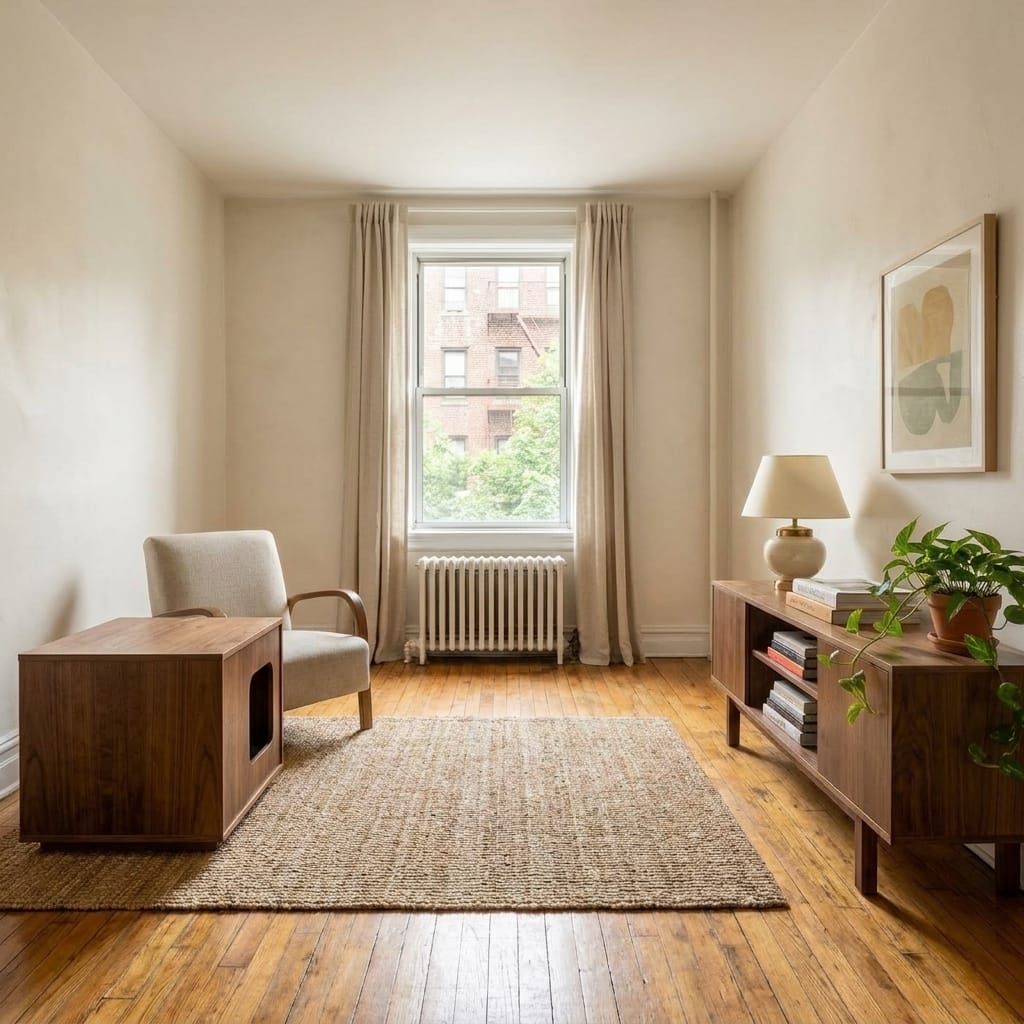 Top pickThe Refined Feline Litter Box Enclosure Top pickThe Refined Feline Litter Box Enclosure | Reads as: Cabinet | Made of: Engineered wood + veneer | Footprint: 4 of 4. Larger; measure the corner first. Rear vents that hold carbon filters, plus a storage drawer |
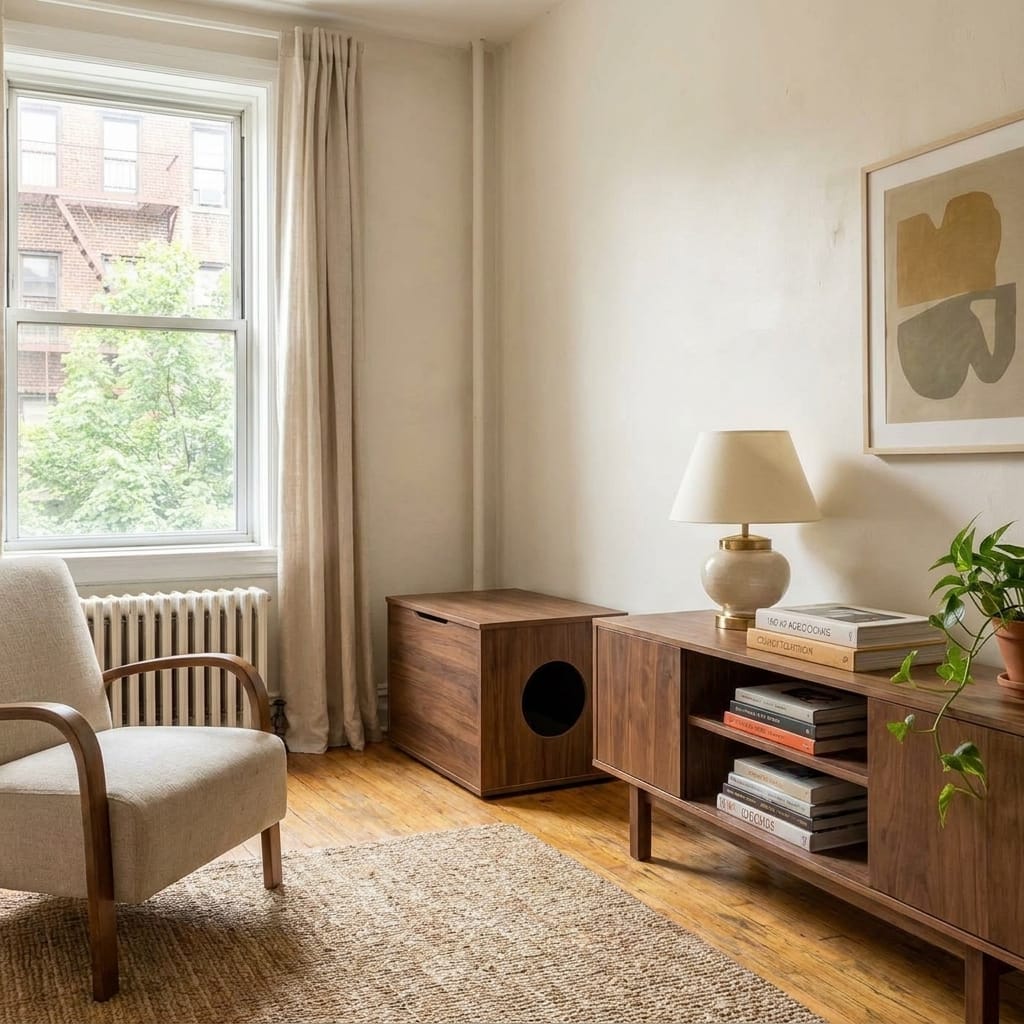 Runner-upNew Age Pet ecoFLEX Litter Loo Runner-upNew Age Pet ecoFLEX Litter Loo | Reads as: End table | Made of: Recycled wood-plastic composite | Footprint: 2 of 4. Compact; tucks into a bathroom. Maker’s size: 18.5 W × 23.8 L × 22.1 H in (opens in a new tab)Inside: 15.7 W × 21.2 L × 18.3 H in. Wipe-clean, moisture-resistant, tool-free assembly |
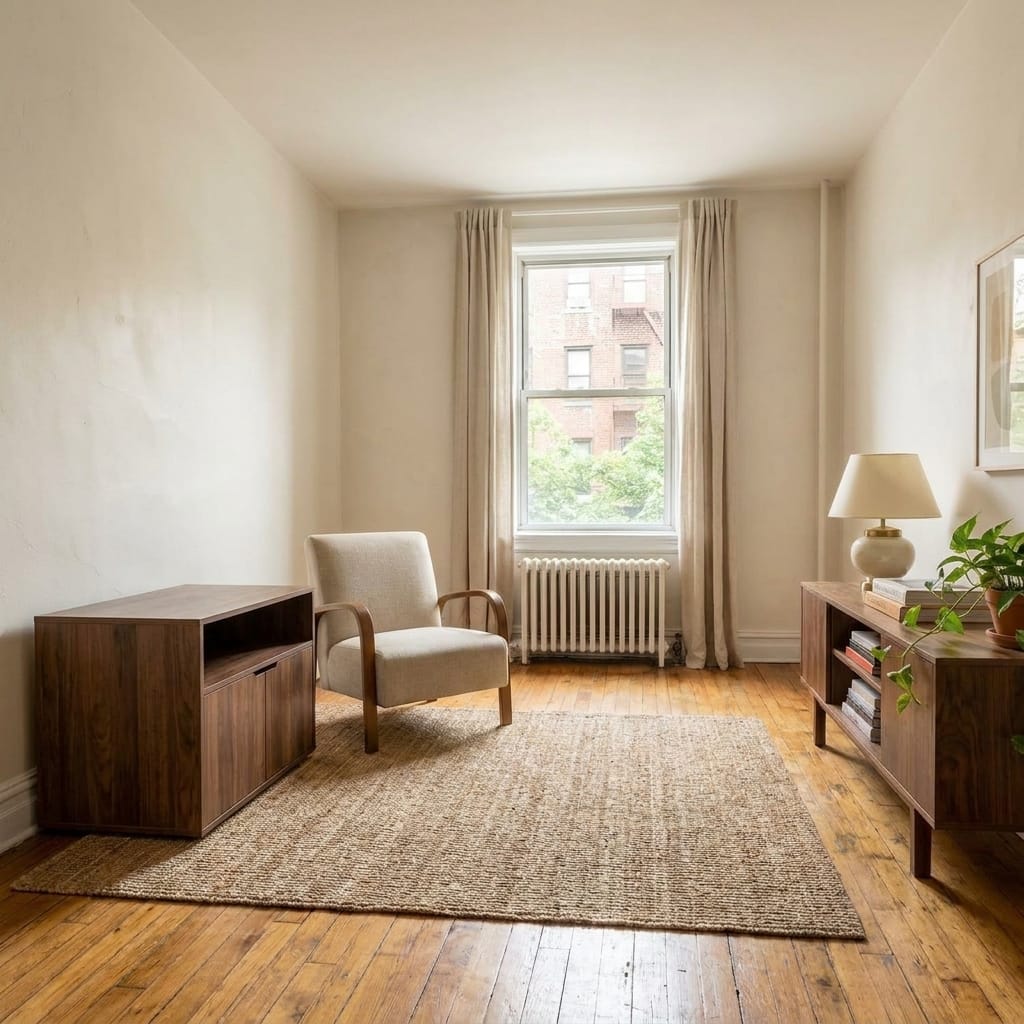 Merry Products Cat Washroom Bench Merry Products Cat Washroom Bench | Reads as: Bench | Made of: MDF + wood | Footprint: 3 of 4. Wider than a side table. Roomy interior with storage and a removable divider |
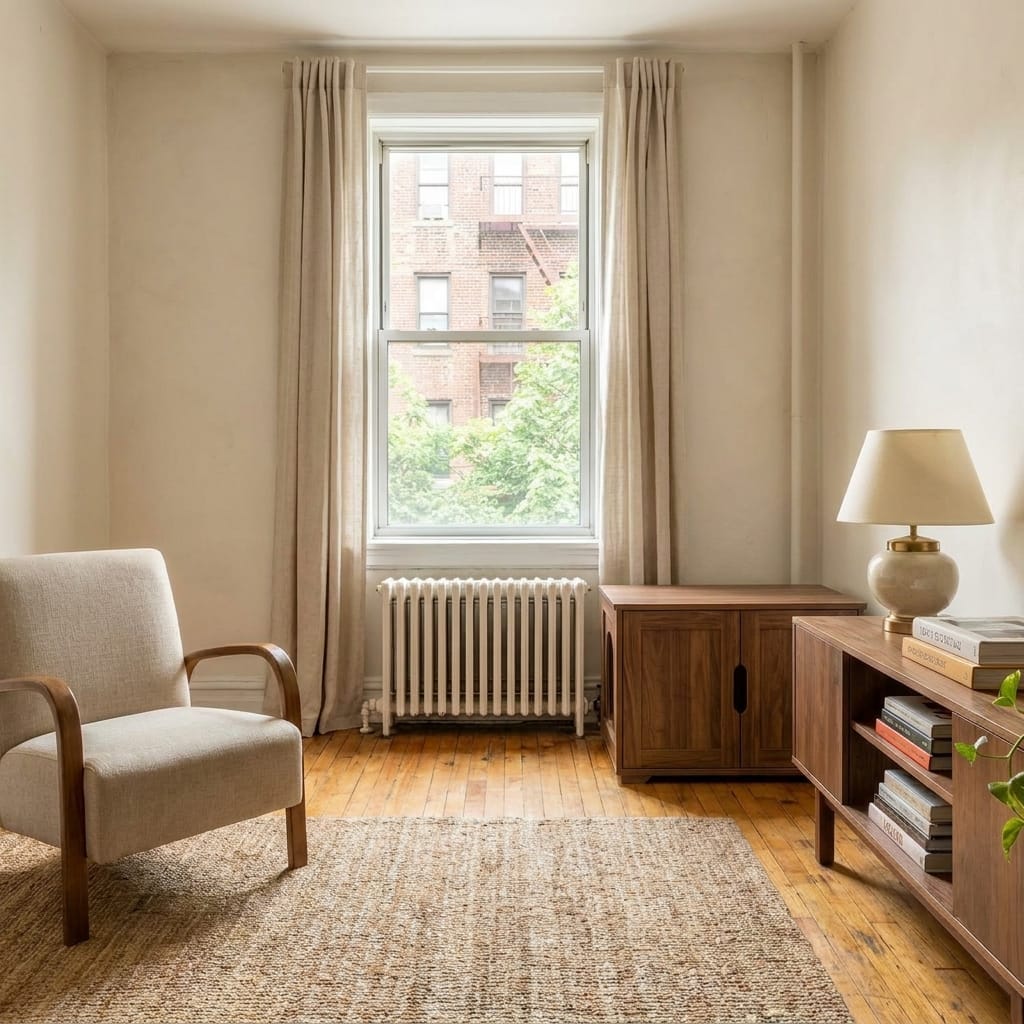 Petsfit Enclosure Side Table Petsfit Enclosure Side Table | Reads as: Side table | Made of: Solid fir wood | Footprint: 1 of 4. The smallest here. Removable floor panel and a latching door |
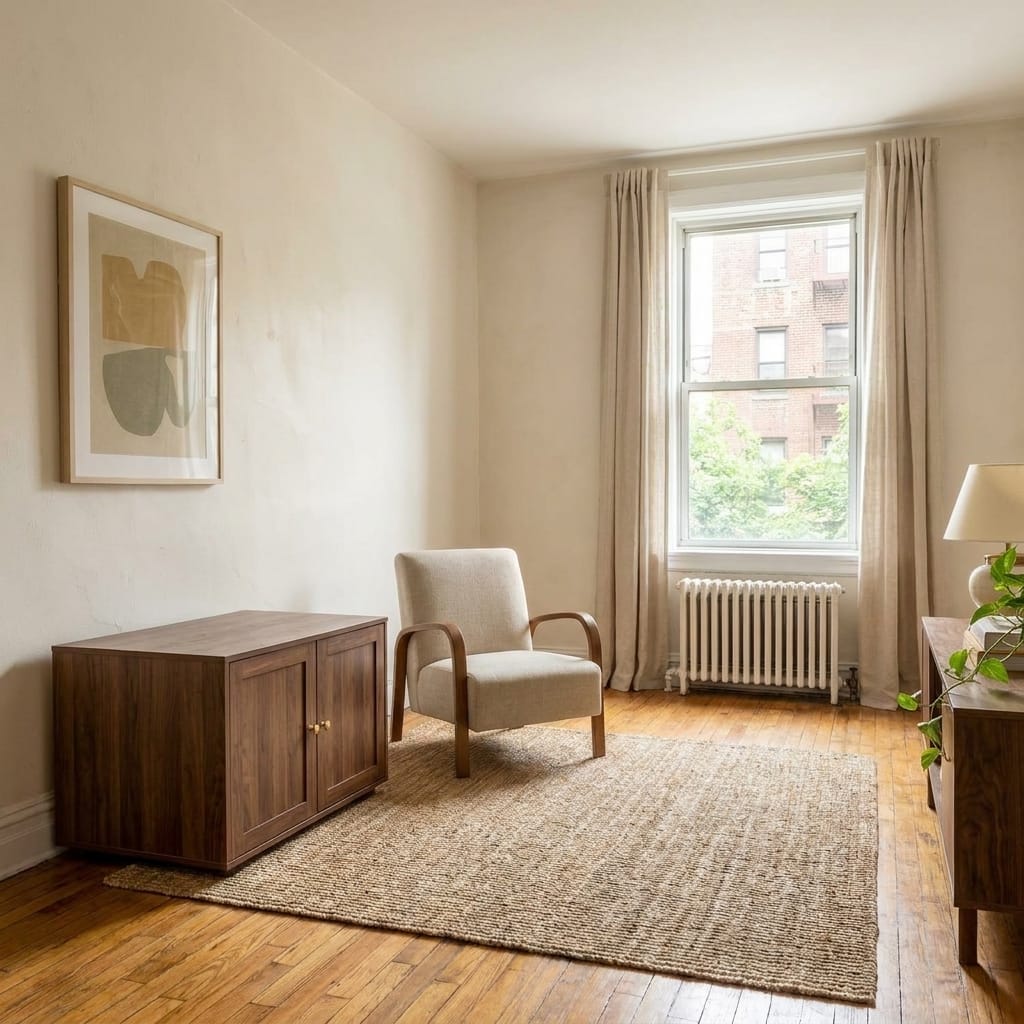 Yaheetech Double-Door Litter Cabinet Yaheetech Double-Door Litter Cabinet | Reads as: Cabinet | Made of: Wood composite | Footprint: 4 of 4. The largest here; plan the wall. Maker’s size: 37.5″ L × 21″ W × 23″ H (opens in a new tab)Inside: Left section 23″ L × 18.5″ W × 20″ H; right section 11.3″ L × 18.5″ W × 20″ H. Double doors and a removable divider for XL boxes |
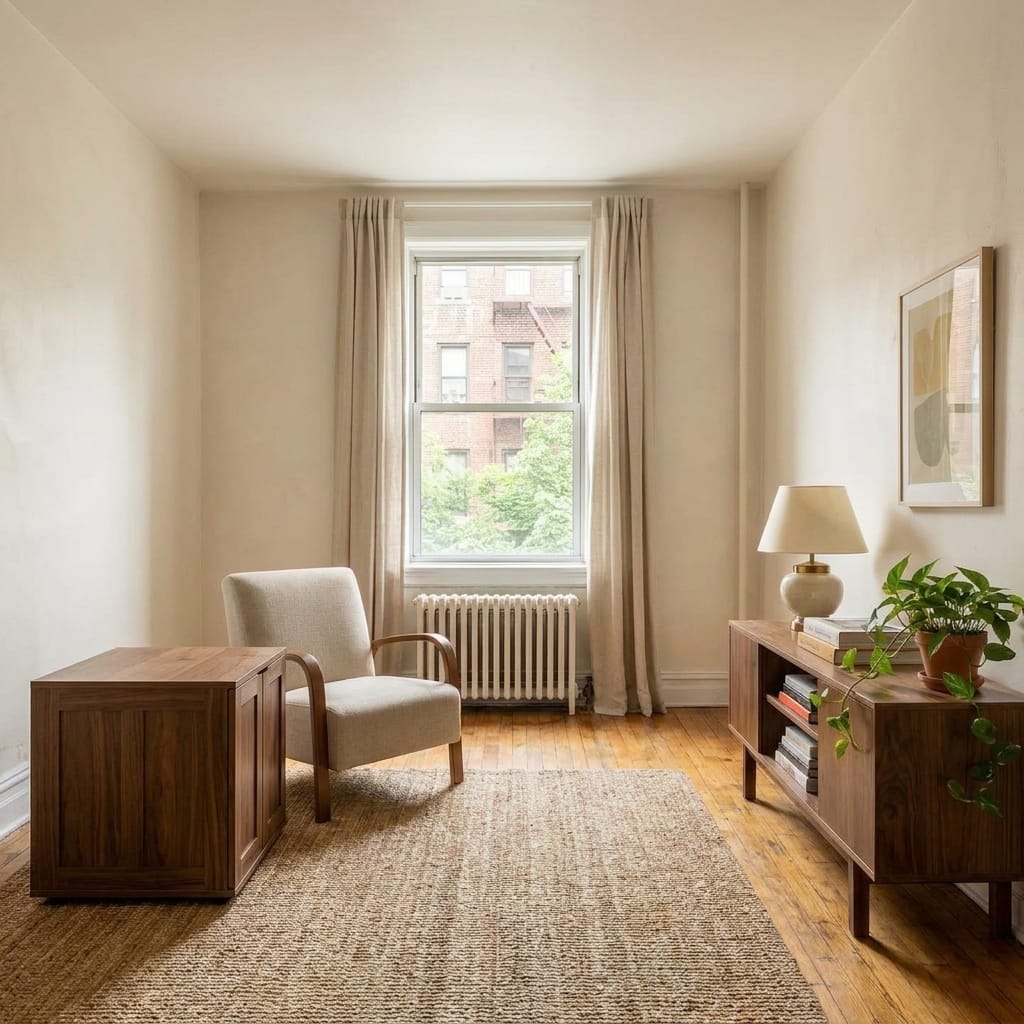 GDLF Modern Wood Cat Washroom Enclosure GDLF Modern Wood Cat Washroom Enclosure | Reads as: Nightstand | Made of: Engineered wood + solid-wood legs | Footprint: 1 of 4. Nightstand-small inside and out. Entry scratch pad to cut tracking, and it’s stackable |
The Refined Feline Litter Box Enclosure
This is the one most people picture when they imagine “litter box that looks like furniture.” It’s a proper cabinet with a hinged top, a side entry for the cat, and a small drawer up front for scoops or spare litter. Reviewers consistently call out that it looks like a genuine piece of furniture rather than a pet product, and it comes in several finishes and feet styles to match different rooms. It is also the only enclosure here with a page of its own — the full Refined Feline review covers the same cabinet in more detail.
- Right for
- People who want it to look like a real cabinet
The others, and why they are not the pick
Every one of these is a real product I would point someone to. None of them is my first choice for a living room, and the specific reason is under each.
Measure first, for any of these: the corner or wall you have in mind, plus the interior room for your pan.
AI illustration
Merry Products Cat Washroom Bench
Right for: Storing litter and scoop in one piece
- Reads as Bench
- Made of MDF + wood
Why it is not the pick: Commonly described as fiddly to assemble.
Check price: Merry Products Cat Washroom Bench — opens Amazon in a new tab
AI illustration
Petsfit Enclosure Side Table
Right for: Small spaces and small-to-medium cats
- Reads as Side table
- Made of Solid fir wood
Why it is not the pick: Interior room is limited: a poor fit for large cats or jumbo boxes.
Check price: Petsfit Enclosure Side Table — opens Amazon in a new tab
AI illustration
Yaheetech Double-Door Litter Cabinet
Right for: Large cats or two boxes
- Reads as Cabinet
- Made of Wood composite
- Maker’s size 37.5″ L × 21″ W × 23″ H (opens in a new tab); Left section 23″ L × 18.5″ W × 20″ H; right section 11.3″ L × 18.5″ W × 20″ H inside
Why it is not the pick: It’s a large piece of furniture; plan the footprint.
Check price: Yaheetech Double-Door Litter Cabinet — opens Amazon in a new tab
AI illustration
GDLF Modern Wood Cat Washroom Enclosure
Right for: Minimalist, modern rooms
- Reads as Nightstand
- Made of Engineered wood + solid-wood legs
Why it is not the pick: Interior room is on the modest side, so it suits small-to-medium cats better than large ones; check the interior dimensions on the current listing.
Check price: GDLF Modern Wood Cat Washroom Enclosure — opens Amazon in a new tab
FAQ
Do cats actually use enclosed litter boxes?
Most do, as long as the box inside is big enough and the entry is easy. Cats mainly want room to turn around and a clean pan. Introduce the new enclosure gradually — put it where the old box was and let your cat investigate before you remove the original.
Doesn’t an enclosure trap odor?
It can if there’s no airflow, which is why ventilation and a carbon-filter option matter. The bigger factor is still litter quality and scooping frequency. An enclosed box you scoop daily smells far better than an open one you neglect.
What about big cats or multi-cat homes?
Size up. Look for enclosures that fit an extra-large pan or two standard boxes (the Yaheetech-style double-door cabinets are built for this). The general rule is one box per cat plus one — a single hidden box may not be enough for several cats.
Are these hard to clean?
It depends entirely on access. Top-opening cabinets and double-door designs are easy; single-door side tables are more of a reach. If low-effort cleaning is a priority, prioritize a lift-up top, double doors, or a removable floor panel.
Will my senior cat be able to get in?
Choose a low front or side entry and avoid top-entry designs, which require jumping in and out. Arthritic cats need a gentle step-over height and solid footing.
Can I just use a top-entry enclosure to stop tracking?
Top-entry lids cut down on litter tracking and keep dogs out, but they’re a poor fit for kittens and senior cats. If tracking is your main worry and your cat is young and agile, it’s an option; otherwise a front-entry cabinet plus a litter mat is friendlier.