
Skip to my pick: The Refined Feline Litter Box Enclosure
The pitch for a self-cleaning litter box is genuinely appealing: never scoop again. A sensor notices the cat has left, a rake or a rotating drum sweeps the waste into a sealed compartment, and you deal with it once a week instead of once a day. For anyone who hates the chore, or who works long hours, or travels, that sounds like the obvious upgrade.
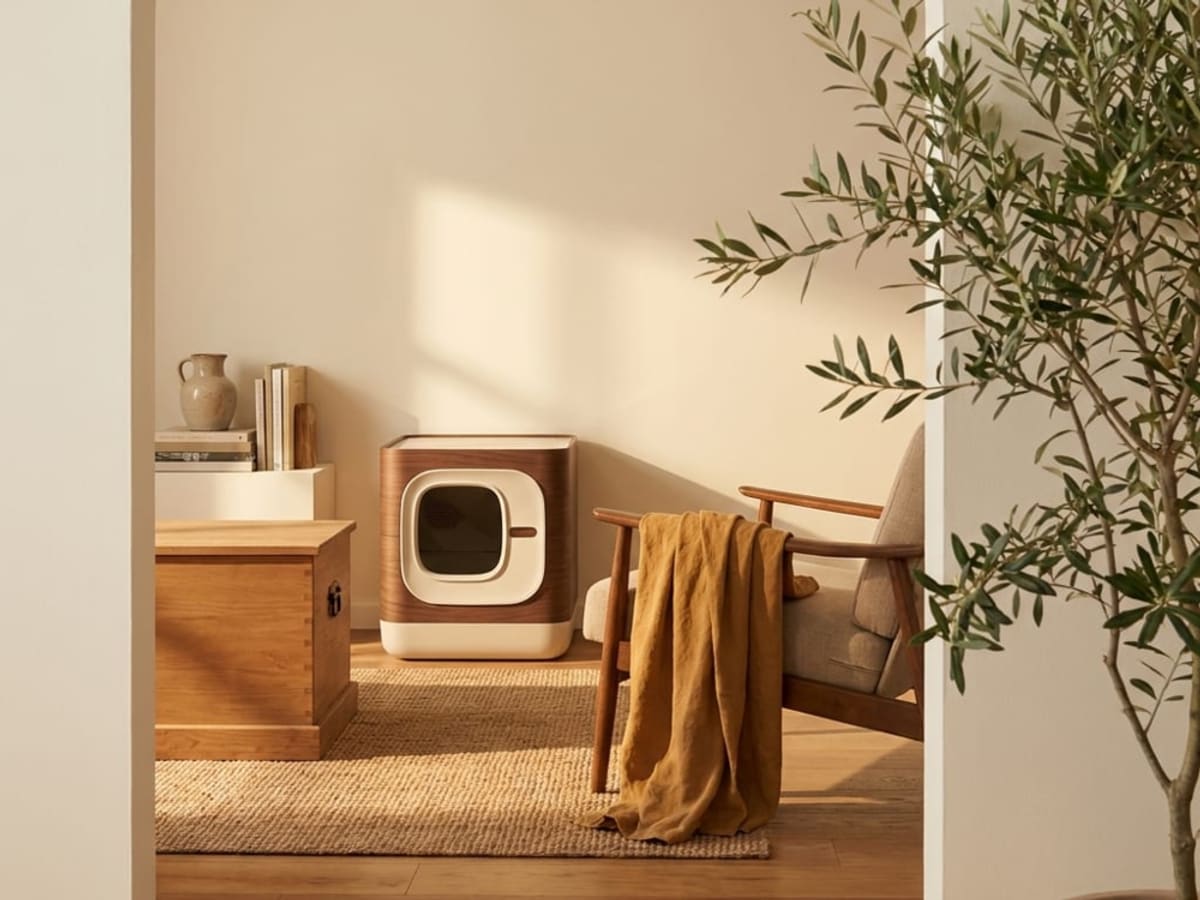
The case for a manual box is quieter but just as real: it’s cheap, it never breaks, it’s small, and every cat already knows how to use one. You scoop it in thirty seconds, and there’s no motor, no sensor, and no failure mode more complicated than “it needs scooping.” In a small apartment especially, that simplicity carries a lot of weight.
Neither is the obvious winner. The right choice depends on your budget, your space, how many cats you have, how often you’re away, and — more than anything — your particular cat’s temperament. Below is an honest comparison, without hype, prices, or brand cheerleading, to help you decide.
Side-by-side comparison
| Self-cleaning | Manual | |
|---|---|---|
| Upfront cost | High (a large multiple of a basic box) | Low (the cheapest option there is) |
| Ongoing cost | Higher (proprietary trays, liners, more litter, power) | Low (just litter and the occasional new box) |
| Convenience / effort | Low daily effort; empties itself between cleanings | Daily scooping, but each scoop is quick |
| Reliability / failure risk | Motors, sensors, and moving parts can jam or fail | Nothing to break; essentially foolproof |
| Size / footprint | Large and bulky; needs floor space and a power outlet | Compact; fits corners, cabinets, and tight nooks |
| Noise | Motor and raking cycle make noise; can run at night | Silent |
| Cat acceptance | Some cats are wary of the movement and sound | Nearly universal; cats already know the format |
| Apartment-friendliness | Harder (bulk, noise, and outlet needs) | Excellent (small, quiet, goes anywhere) |
Self-cleaning: pros and cons
Pros:
- Hands-off daily routine: no scooping between full cleanings
- Waste gets sealed away quickly, which can help with odor between cleanouts
- Useful if a health issue makes bending and scooping genuinely hard
- Handy for a few days away when nobody can scoop for you
Cons:
- Expensive to buy, and the ongoing costs add up: special trays or liners, more litter, and electricity
- Moving parts fail; a jammed rake or a dead sensor turns a premium box into an unusable one
- Bulky, and it needs to sit near a power outlet
- The motor and cycling noise can startle a cat or disturb a quiet room
- Some cats simply won’t accept the movement, and a spooked cat may stop using the box
- Still needs real maintenance: you empty the compartment, wipe it down, and periodically deep-clean it
Manual: pros and cons
Pros:
- Cheap to buy and cheap to run; litter is the only real cost
- Nothing to break, jam, or lose power; it just works
- Small and quiet, so it fits almost anywhere in a small home
- Every cat understands it instantly, with no adjustment period
- Easy to have several of, which matters in multi-cat homes
Cons:
- You have to scoop, ideally once or twice a day
- Odor builds faster if you skip a scoop, since waste sits until you remove it
- No help while you’re away: someone has to keep scooping
- The daily chore is easy to put off, and a neglected box is one a cat may abandon
The honest summary: self-cleaning boxes buy you convenience at a real price, in money, in bulk, and in the risk that they break or spook the cat. Manual boxes ask for a little daily effort and give you reliability, low cost, and a small footprint in return.
Which should you get?
On a tight budget: manual, without much hesitation. The upfront and ongoing savings are large, and you lose nothing a cat cares about. A good manual box plus quality clumping litter outperforms a cheap, unreliable automatic one every time.
In a small studio: manual. Bulk, noise, and the need for an outlet all work against an automatic box in a room where you also sleep and live. A compact manual box tucks into a corner or a cabinet and stays silent through the night.
With multiple cats: it’s nuanced. The rule of thumb — one box per cat, plus one — is far cheaper to satisfy with manual boxes, and many self-cleaning boxes don’t cycle fast enough for heavy back-to-back use. A single automatic box rarely replaces the several boxes a multi-cat home needs, so most multi-cat households are better served by several manual boxes.
If you travel often: this is where self-cleaning earns its keep. A box that clears itself for a few days can bridge a short trip when no one’s around to scoop. Even then, plan for someone to check it, since a jam or a full compartment while you’re gone leaves your cat without a usable box.
With a skittish or anxious cat: manual. A nervous cat and a moving, humming machine are a bad match, and the failure here isn’t just wasted money — it’s a cat that stops using the box and starts going elsewhere. If you still want to try automatic, introduce it slowly alongside the old box and watch closely.
Either one can be hidden
Whichever type you choose, you don’t have to live with a plastic box on display. Both formats can be concealed, though the automatic box’s size and outlet needs make it the harder of the two to tuck away. Purpose-built cabinets exist for both — my roundup of furniture-style litter enclosures walks through options judged on looks, odor control, and cleaning access, and just remember that a self-cleaning unit needs an enclosure big enough for its bulk and a nearby outlet.
If you’d rather work with what you have, how to hide a litter box covers nooks, screens, and DIY conversions that suit a manual box especially well. And if you’re planning the whole space around a cat, my cat-friendly living room ideas show how the box fits alongside everything else.
The bottom line
For most people — and nearly everyone in a small apartment — a manual box is the smarter default. It’s cheap, reliable, quiet, compact, and universally accepted by cats, and consistent daily scooping controls odor better than any machine does on its own. A self-cleaning box makes real sense in a narrower set of cases: you strongly dislike scooping, you travel enough to value the buffer, you have the budget for the purchase and the running costs, and you have a confident cat likely to accept it. Match the box to your situation rather than the marketing, and either one can work well.
FAQ
Are self-cleaning litter boxes worth the money?
It depends entirely on your situation. If you dislike scooping, travel often, and have both the budget and a confident cat, the convenience can be worth the high upfront and ongoing cost. If money is tight, your cat is nervous, or you have multiple cats, a manual box usually delivers better value and fewer headaches. The convenience is real, but so are the cost and the failure risk.
Do cats actually use self-cleaning litter boxes?
Many do, but not all. Confident, adaptable cats often accept them once they get used to the noise and movement, while skittish or anxious cats may avoid them entirely. The safest approach is to introduce the new box gradually while keeping a familiar manual box available, and to watch closely for any sign the cat is hesitating at the entry or going elsewhere.
Do self-cleaning litter boxes really eliminate scooping?
They eliminate the daily scoop, but not maintenance altogether. You still empty the sealed waste compartment, wipe the unit down, and periodically deep-clean the whole thing. They also need the right litter and a working motor and sensor to do their job, so “never touch it again” overstates what they actually deliver.
Is a manual litter box better for a small apartment?
Usually, yes. Manual boxes are compact, silent, need no outlet, and go anywhere — all of which matter in a studio or one-bedroom where you live in the same room as the box. A self-cleaning box’s bulk and motor noise are harder to live with in a small space, so most apartment dwellers are better served by a manual box, ideally one that’s tucked into an enclosure or a nook.
What happens if a self-cleaning litter box breaks?
Because they rely on motors, sensors, and moving parts, they can jam or fail, and when that happens you’re left with an expensive, unusable box until it’s fixed or replaced. This is especially risky while you’re traveling — the exact time you’re depending on it. Keeping a basic manual box on hand as a backup is a sensible precaution for anyone who owns an automatic one.
Which is better for multiple cats?
Manual boxes are generally the better fit for multi-cat homes. The standard guidance is one box per cat plus one extra, which is far more affordable to meet with manual boxes, and many automatic units can’t cycle quickly enough for several cats using them in close succession. A single self-cleaning box rarely replaces the number of boxes a multi-cat household actually needs.